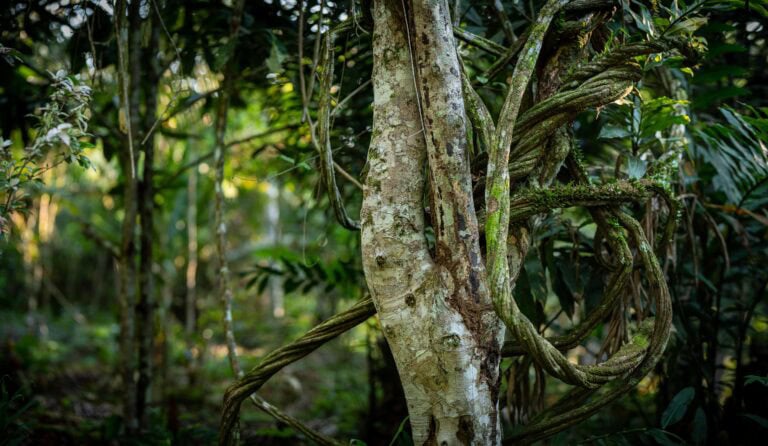
The Amazon rainforest is not only the largest tropical forest on Earth. It is a vast network of relationships. Water, soil, plants, animals, spirits, and people – each part of a living system that has been evolving for thousands of years.
For the people who live within it, the forest has never been separate from life itself. It shapes their medicine, their songs, their ways of cultivating the land, and their understanding of how human beings can live in harmony within a larger living world. Among these people are the Shipibo, whose knowledge of plants, healing, and ecology has grown through a long, attentive dialogue with the forest.
In this relationship, the forest is not simply a resource. It is a teacher. And the role of the human being is not to dominate the land, but to participate in and steward its renewal.
The Problem of Forgetting
These reflections are expressed by Shipibo healer Maestro José in his book, Trabajar con las plantas que tienen madre:
“Human beings and the planet are being exterminated. The planet is the most beautiful thing there is. Yet no matter how many words, sciences, or religions exist, we remain ignorant – and it is this ignorance that prevents us from caring for our home, which is the Earth.”
For José, the problem is not only environmental. It is a forgetting. A forgetting that the Earth is our home.
Long before the language of “regeneration” entered modern ecological conversations, many Amazonian cultures had already developed ways of cultivating the land that worked with the rhythms of the forest rather than against them.
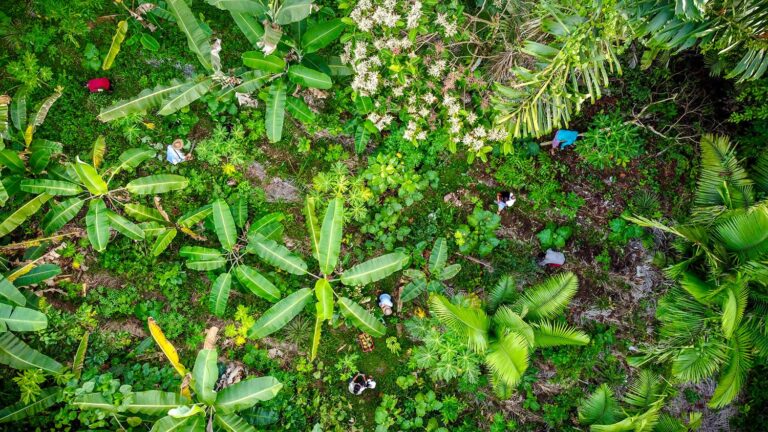
Their chacras were not monocultures but living mosaics – diverse gardens where food crops, fruit trees, palms, medicinal plants, and forest species grew together.
Over time, these cultivated landscapes gradually blended back into the forest itself. The forest fed the people. And the people, in turn, helped the forest grow. This quiet reciprocity is one of the deeper teachings of the Amazon and its peoples.
A Landscape of Ashes Begins to Heal
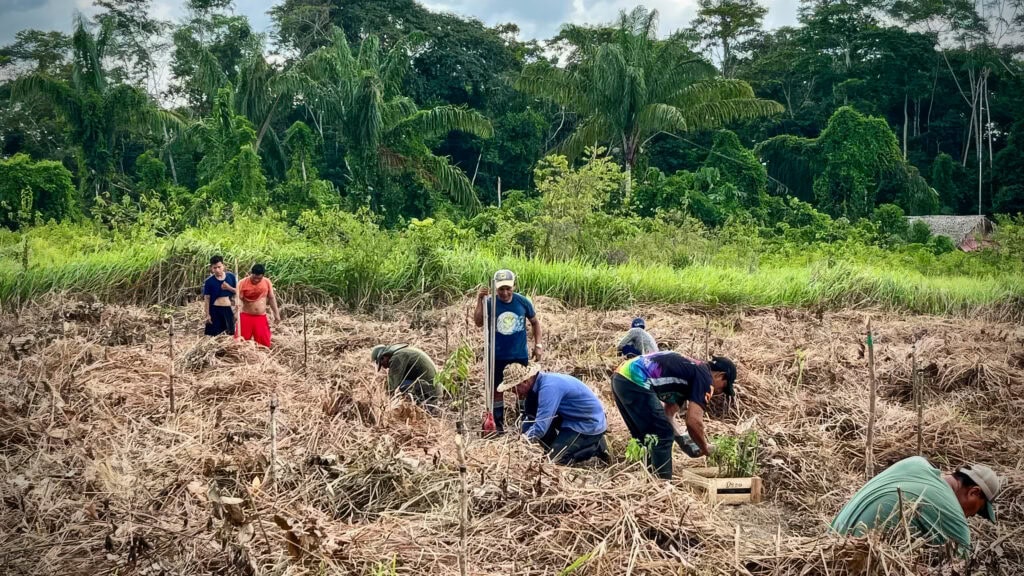
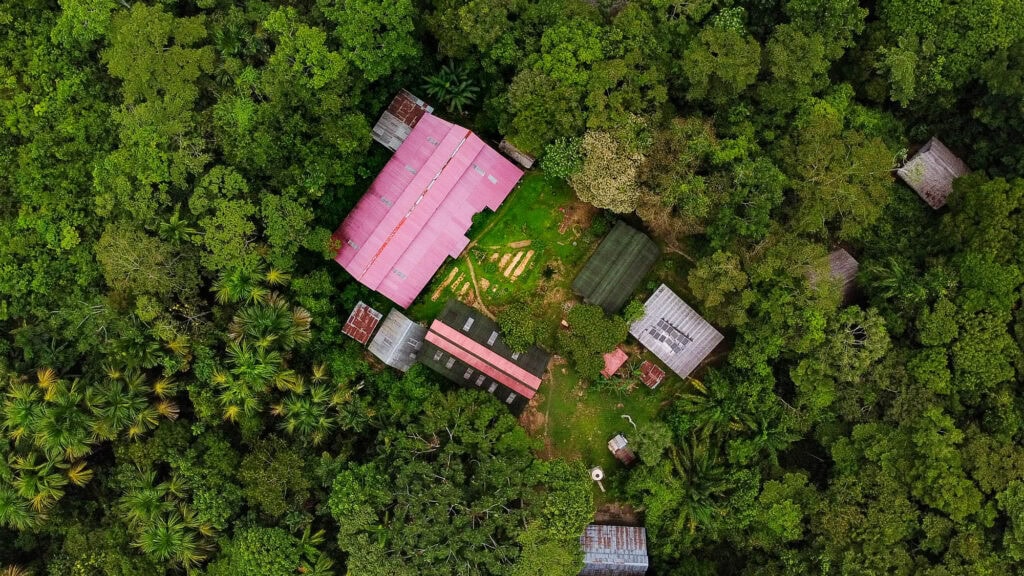
Recently, a regeneration effort began to take shape at Shipibo Rao, an ancestral healing center dedicated to the practice of master plant diets, directed and led by Maestro José. Several years ago, an uncontrolled agricultural fire burned through the area, leaving behind a landscape of ashes where forest once stood.
Slowly but surely, natural succession began to take its course. Grasses and pioneer plants appeared, gently healing the wounds left by the fire. Forests possess a remarkable patience. Given time – and sometimes a little help – life always begins again.
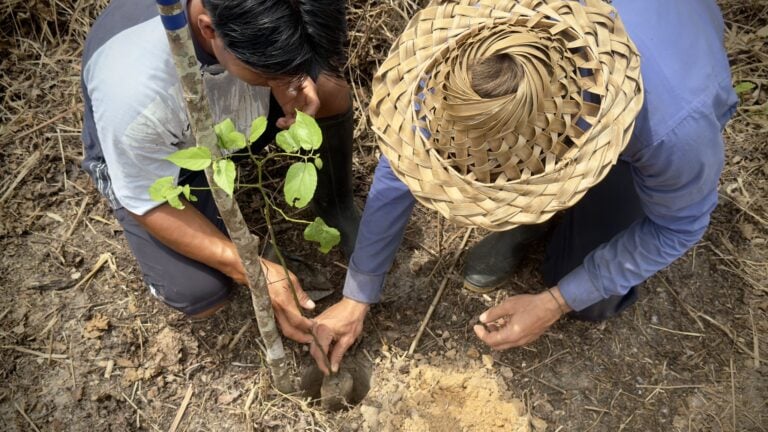
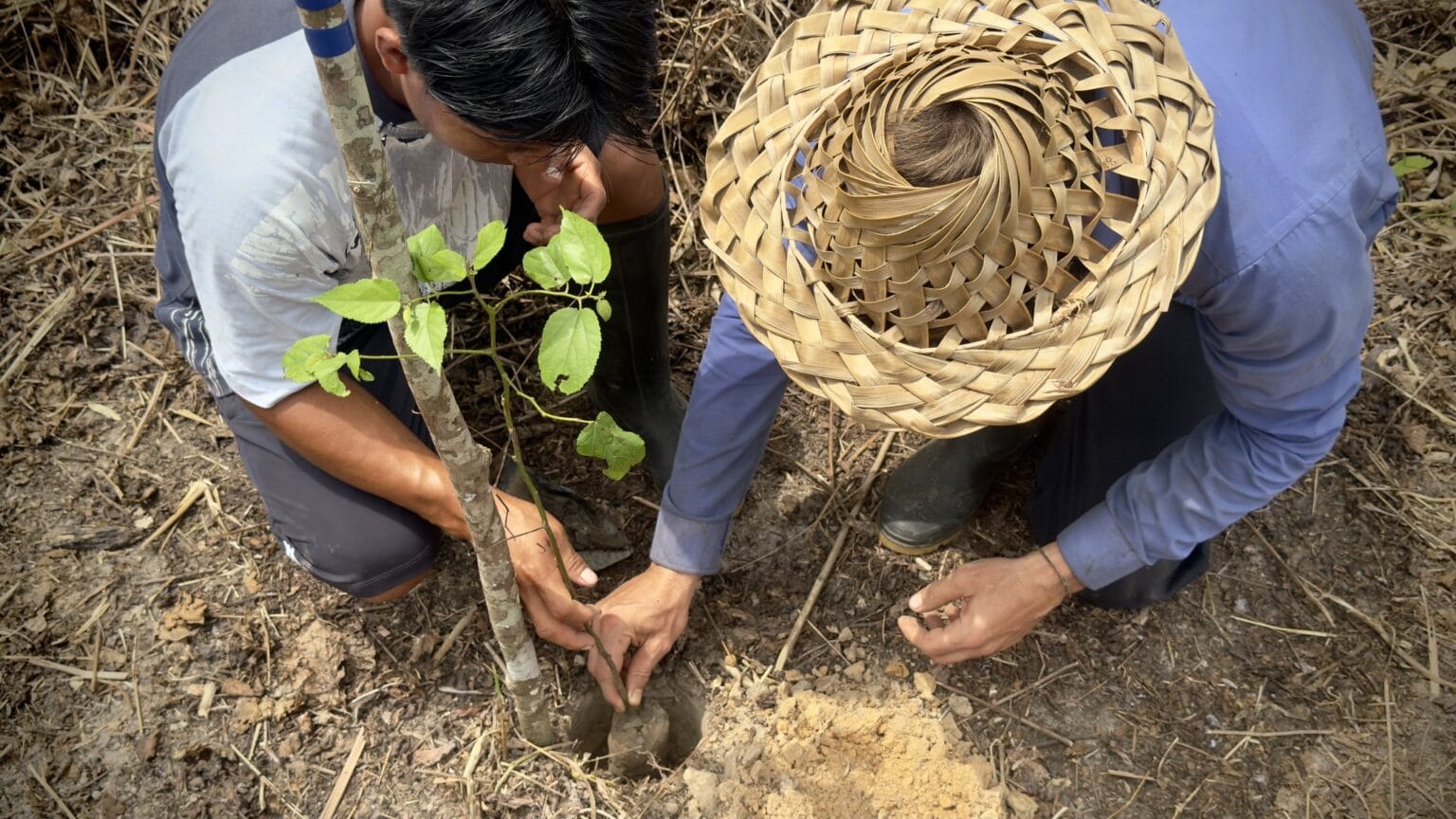
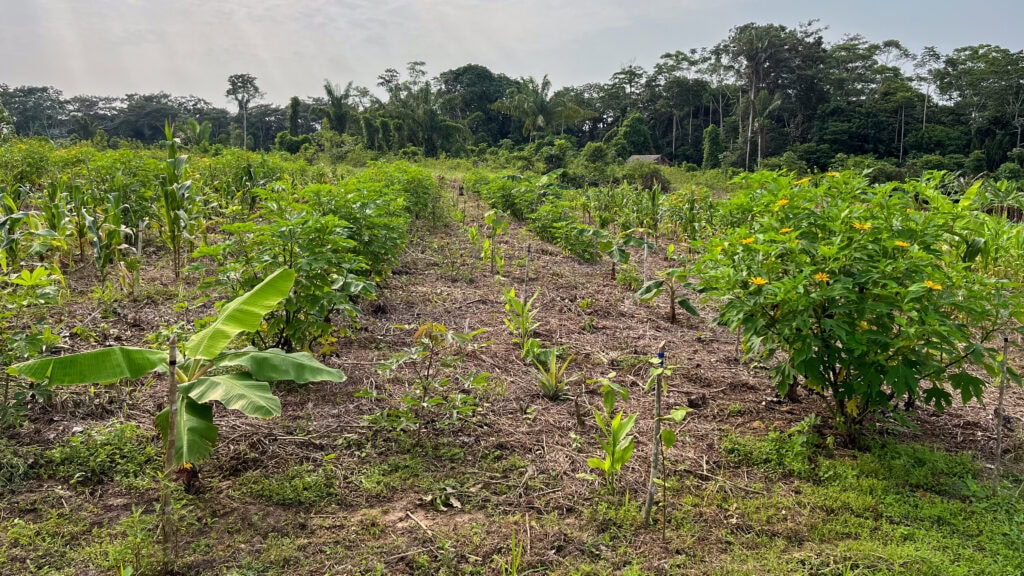
The first step in this effort is modest: a demonstration agroforestry plot of roughly a quarter of a hectare. Within this small space, more than forty species of trees, palms, food crops, and medicinal plants are being planted together following the principles of successional agroforestry.
The intention, however, reaches further. Over time, our intention is to regenerate approximately two hectares of land at Shipibo Rao, while supporting nearby families in restoring an additional 1.25 hectares of their own land.
In this way, what begins as a small experiment can slowly grow into a shared landscape of regeneration.
Successional Agroforestry: The Forest’s Blueprint
Rather than planting a single crop, successional agroforestry involves planting multiple species together in ways that follow the natural stages of forest regeneration.
- Pioneer plants rebuild soil fertility.
- Fruit and palm trees bring nourishment to the community.
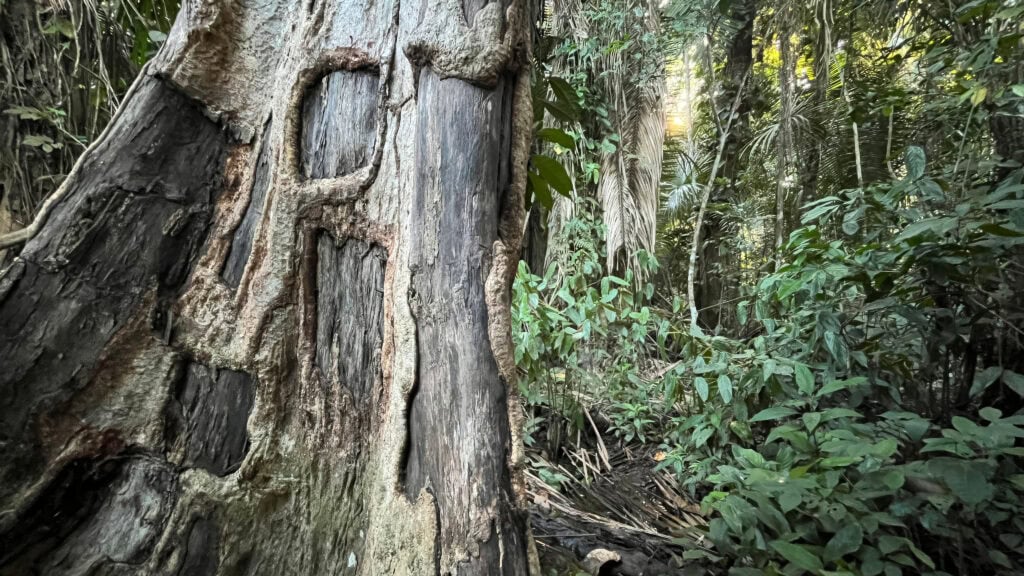
- Long-lived forest species slowly rise toward the canopy, eventually hosting thousands of beings.
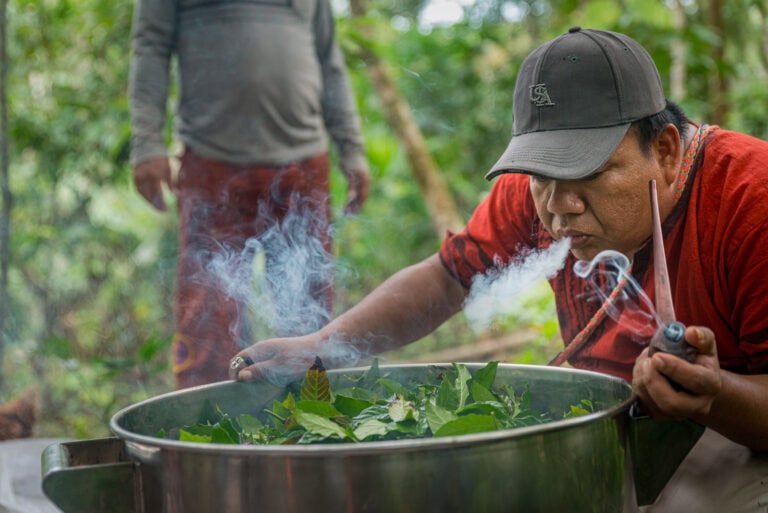
Over time, diversity itself becomes the engine of resilience, and fertility follows. Among the species planted are forest giants such as Shihuahuaco, Tamamuri, Copaiba, and Caoba. At the heart of the system also grows Chacruna, the sacred leaf used in the preparation of Oni (Ayahuasca).
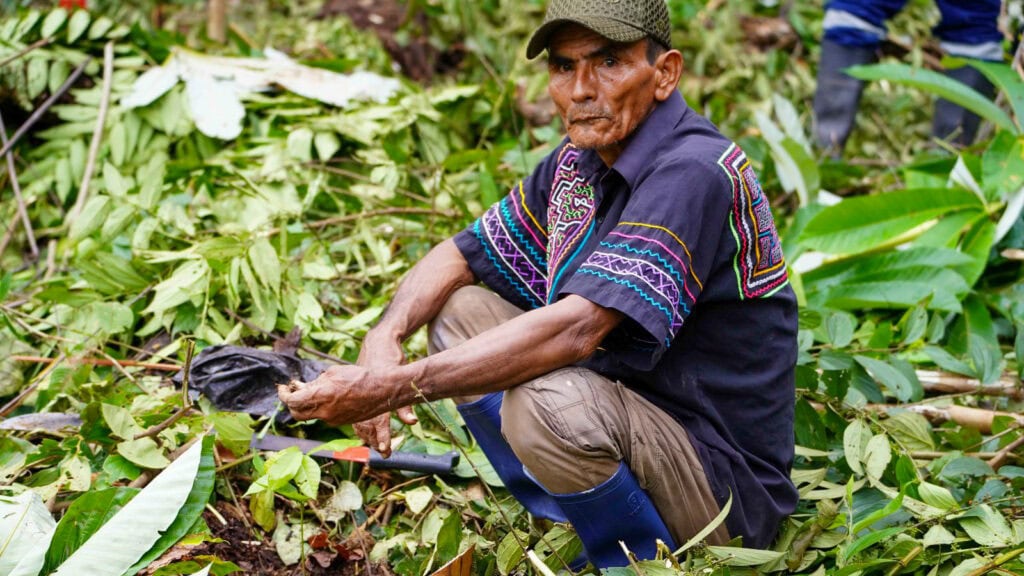
Naturally adapted to the shaded understory, Chacruna thrives beneath the protection of larger trees. In this way, the design of the chacra reflects not only ecological principles but also the cultural and medicinal traditions of the Shipibo people. The forest, like a community, grows through relationships.
“The large trees are the ones that keep the younger ones firmly rooted in the earth.”
— Maestro José López Sánchez
The Field School: A Living Classroom
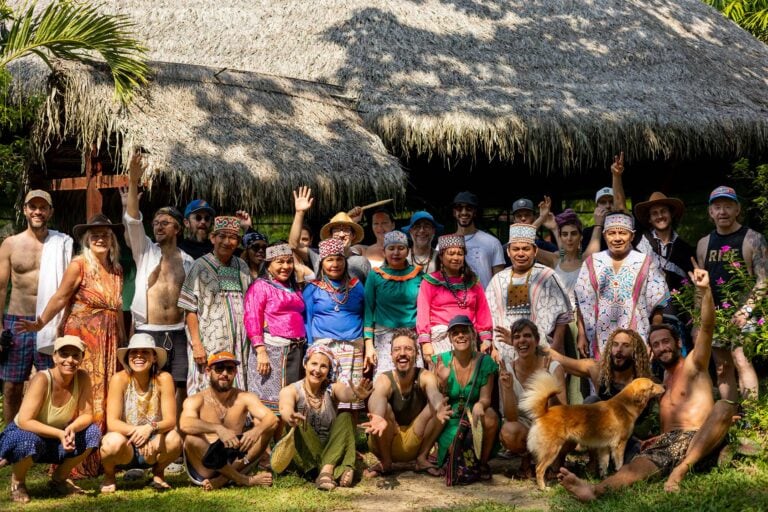
The planting of the chacra was not only an act of restoration; it was also an opportunity for shared learning. Community members from nearby villages joined through a small escuela de campo (field school), where we explored the principles behind successional agroforestry.
Rather than beginning with theory, the process began with observation. Participants visited burned land, fallow chacras, and regenerating forest, reflecting on what they saw:
- What color is the soil in each place?
- How does the ground cover change?
- How much shade is present, and how many layers of stratification are there?
- How do we feel in each of these environments?
Through these observations, a simple realization emerges: the forest itself already holds the blueprint for regeneration. The plot at Shipibo Rao is intended to become a living classroom where families and young people can continue learning together.
Interwoven Networks of Support
This small effort at Shipibo Rao is part of a much larger movement unfolding across the Amazon. The Temple of the Way of Light plays a significant role in amplifying the importance of Shipibo healing traditions, while its sister organization, the Chaikuni Institute, focuses on ecological and cultural regeneration.
In the Shipibo language, Chaikuni refers to ancestral protective spirits – guardians of the forest. The institute works to bridge traditional ecological wisdom with contemporary approaches, connecting communities with regenerative experts such as ECOTOP. For more than thirty years, ECOTOP has been sharing agroforestry systems inspired by the pioneering work of Ernst Götsch, who transformed hundreds of hectares of degraded pasture into thriving forest in Brazil.
Before the project began at Shipibo Rao, Winston – a central member of the community and guardian of the land – traveled with me to the Chaikuni Institute to participate in a regional training led by Fortunato, a consultant from ECOTOP.
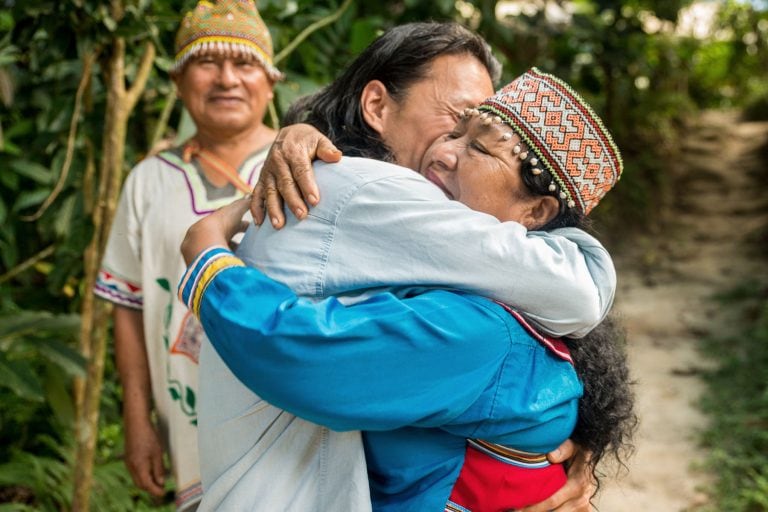
The gathering brought together more than thirty farming families from across the Putumayo, Amazonas, Marañón, and Nanay river basins. In this way, ancestral knowledge and contemporary ecological practices learn from one another.
A Personal Journey and a Future Vision
My path into this work began at the age of twenty-one, driven by a passion for permaculture. This journey led me to apprentice at Ecocentro Madre Selva and eventually spend four years with the Chaikuni Institute, learning alongside Indigenous communities. Since 2022, I have been walking a healing path with Maestro José at Shipibo Rao.
From this relationship, the regeneration project described here was inspired by my work with the Chaikuni Institute and emerged from my heart, as a way to support José’s vision in reciprocity with the wisdom of the forest.
For Maestro José, the regeneration of this land carries another vision. The territory surrounding Shipibo Rao was once a place where Merayas – advanced Shipibo healers – came to study with powerful master plants.
Today, José hopes to create a space where young Shipibo can continue learning these ancestral traditions. Planting trees, for him, is about protecting knowledge. Because in the Shipibo tradition, the plants are teachers. And the forest itself is a school.
Choosing to Walk Together
The young trees at Shipibo Rao are still small. Their roots are only beginning to reach deeper into the soil. The forest that may one day grow here will take many years to mature. But regeneration rarely begins with a clear outcome. It begins with participation.
It begins with planting a few trees. By learning from those who have lived in relationship with the forest for generations. By remembering that the Amazon is not only something to protect. It is a living world that many people call home.
And sometimes the most meaningful offering we can make is simple: To plant something today that the forest will continue growing long after we are gone.
Perhaps regeneration begins in this simple way: remembering that the forest is alive and choosing to walk with it once again.