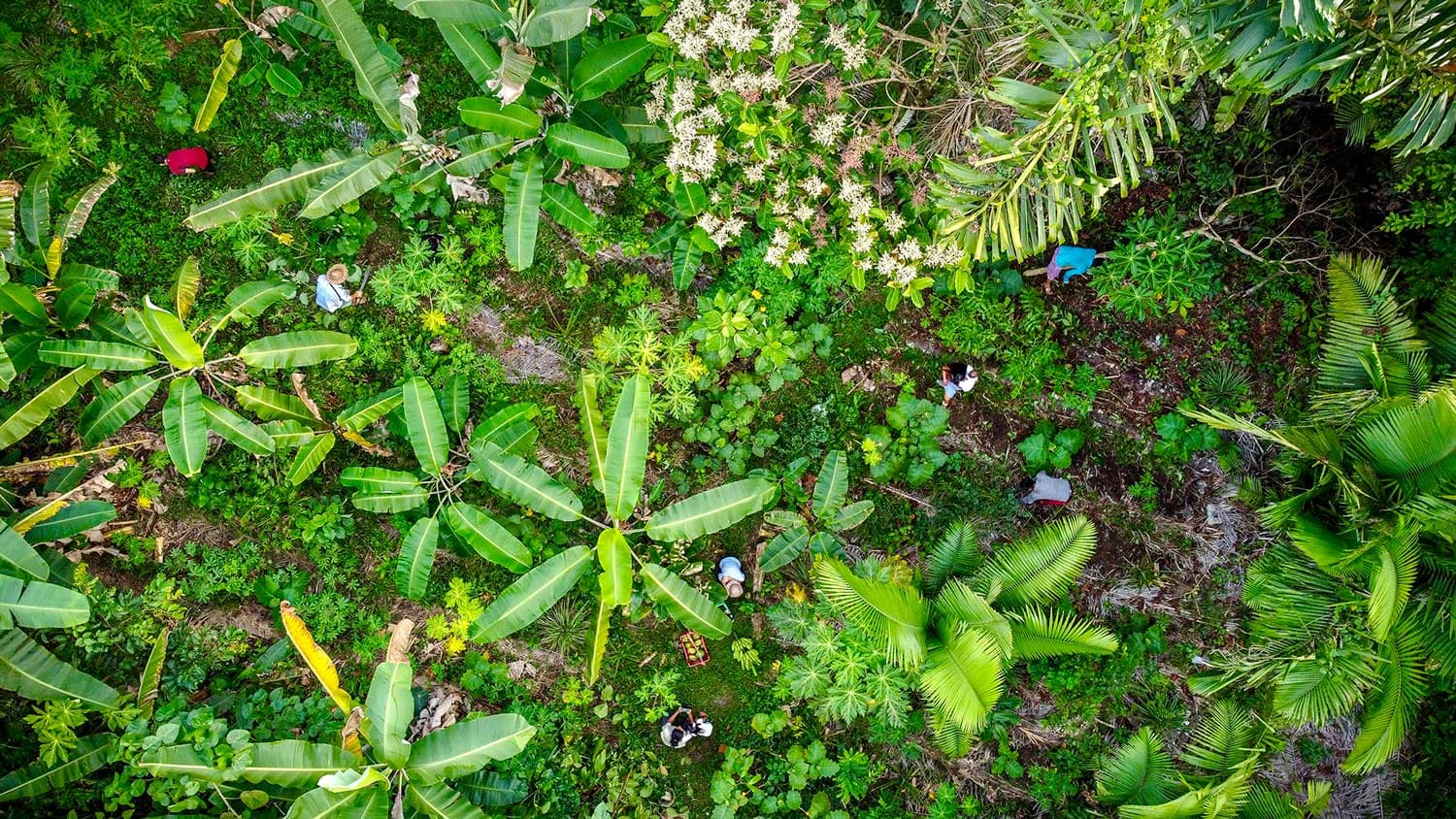
The Forest That Holds You
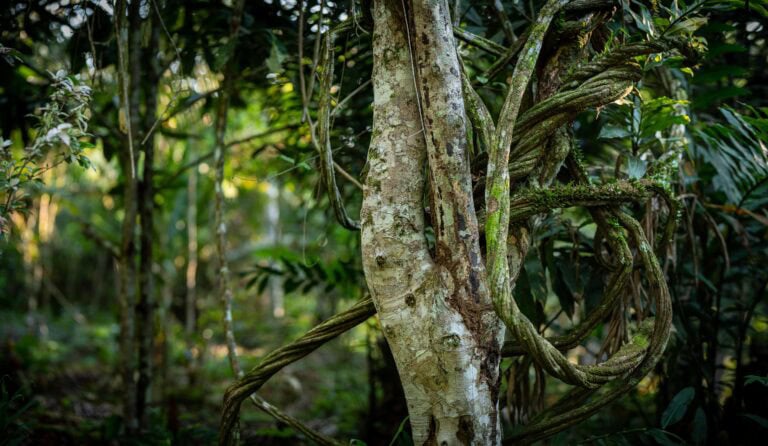
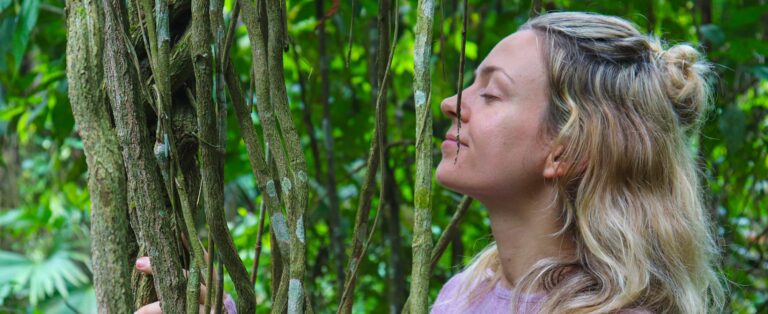
The ayahuasca vine does not grow in isolation. It is nurtured by an entire ecosystem – a biological and spiritual intelligence that took thousands of years to develop, and that depends profoundly on the health of the land around it.
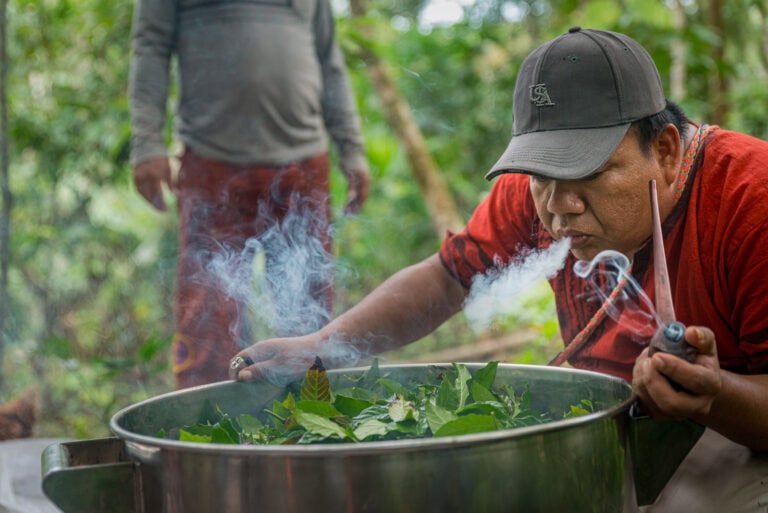
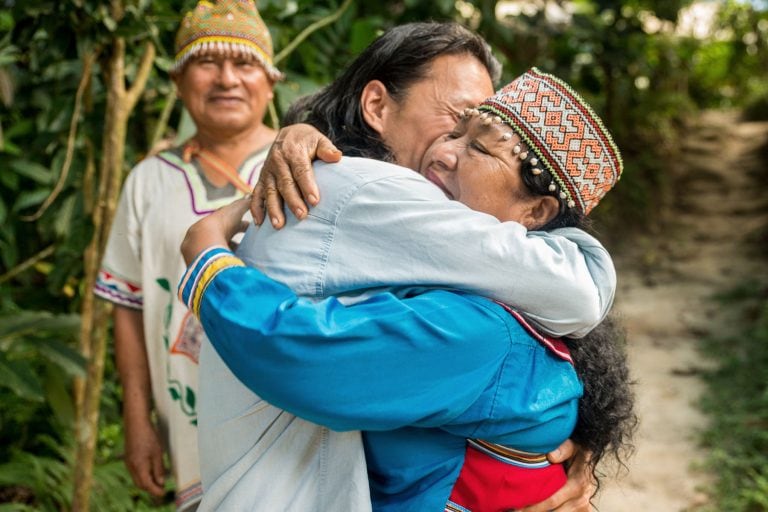
The Shipibo people, like many other indigenous communities of the Amazon, perceive the rainforest not as a resource but as a diverse community of sentient beings. Plants and animals, trees and insects, winds, rivers, and all of nature’s phenomena are interwoven and in continuous communication with human life, both subtly and directly. In their worldview, human healing and the healing of the land are not separate processes. They are the same, expressed in different forms, moving in different directions at once.
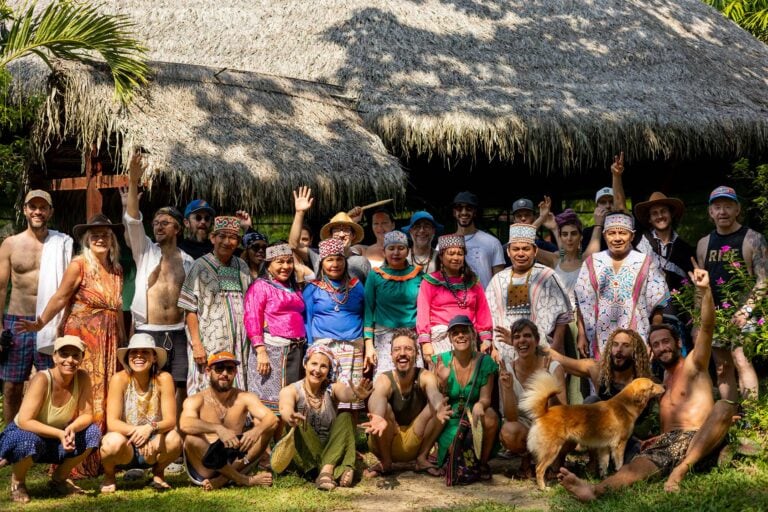
When you sit in ceremony at the Temple, you are held not only by the healers and facilitators. You are held by the Amazon itself.
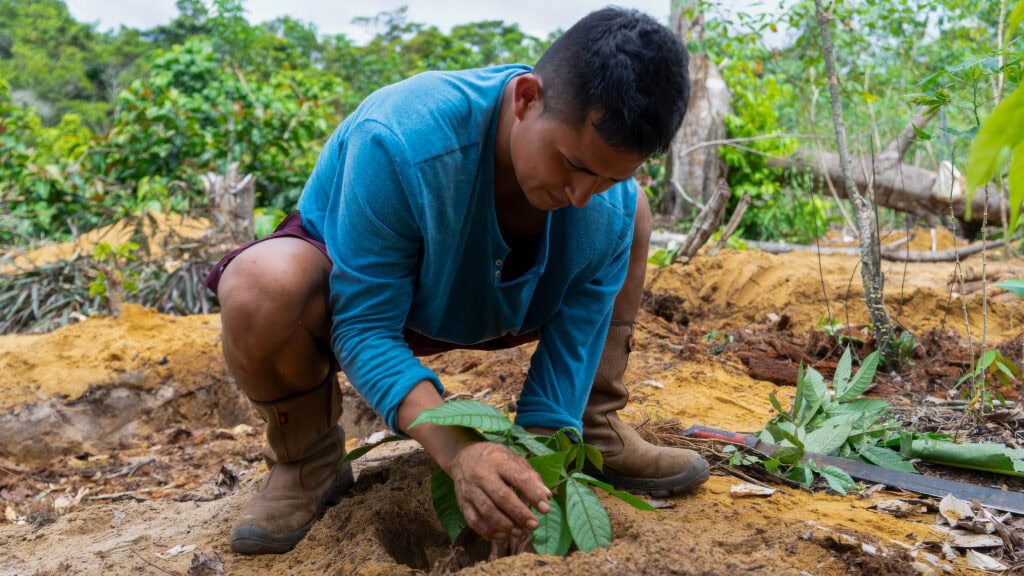
Ayni – Reciprocity as a Way of Life
In Quechua, the most widely spoken indigenous language of Peru, the word for this universal principle is Ayni.
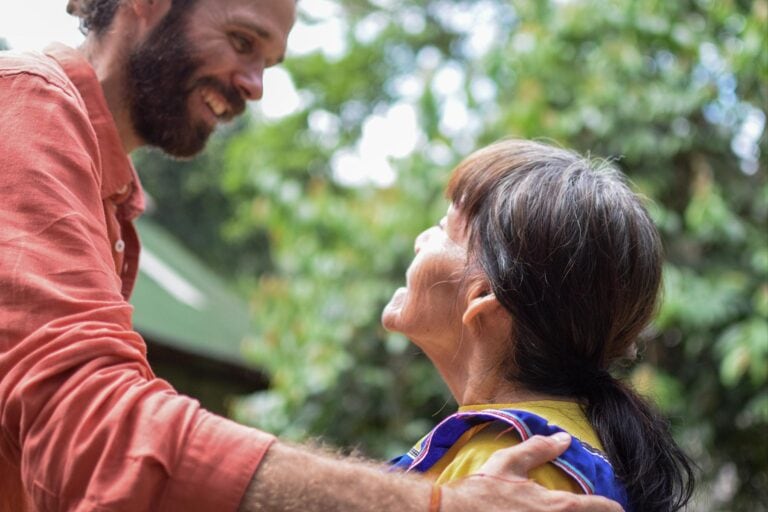
It closely translates as interconnectedness and reciprocity – the recognition that no individual or community exists in isolation, but is woven into a net of interdependence that entails mutual responsibility for the well-being of each other.
Ayni fosters the exchange of wisdom and beneficent action between individuals, the environment, the elements, and the spirits of nature. It is not a philosophy. It is a description of how life actually works. When we live in Ayni, we tap more easily into what the Chaikuni Institute calls the sacred matrix of life – the mysterious, sentient, and benevolent ordering principle that exists just beneath the surface of ordinary consciousness.
As the global reach of ayahuasca grows, Ayni calls us toward a clear responsibility: to appreciate the journey this medicine has taken to reach us, and to reciprocate – to its source, and to the people who have cared for it across thousands of years.
A Forest Under Pressure
The Amazon rainforest contains over half of the planet’s remaining rainforest habitat, holds 25% of the world’s carbon, and produces one-fifth of the planet’s freshwater. It is the world’s premier center of biological and cultural diversity – home to unique cultures, languages, and countless species of flora and fauna that exist nowhere else on earth.
Rather than the lungs of the planet, scientists now understand the Amazon as something closer to its air conditioner – one of nature’s most powerful tools for drawing carbon dioxide out of the atmosphere and regulating the global climate. When it burns, our oxygen supply is not threatened. It is the carbon stored across millennia, released in an instant.
It is also under severe pressure. Every year, approximately 1.4 million hectares of Amazonian forest are destroyed, primarily through slash-and-burn agriculture – a practice that rapidly depletes soil, kills micro-organisms, and forces farmers to continually clear new land, leaving behind degraded and nutrient-deficient landscapes. As deforestation accelerates, the Amazon approaches a tipping point from which recovery may not be possible.
Studies consistently show that indigenous-managed lands sequester significantly more carbon than those managed by extractive industries. The future of the Amazon depends, in no small part, on the ability of forest peoples to maintain rightful tenure over their land.
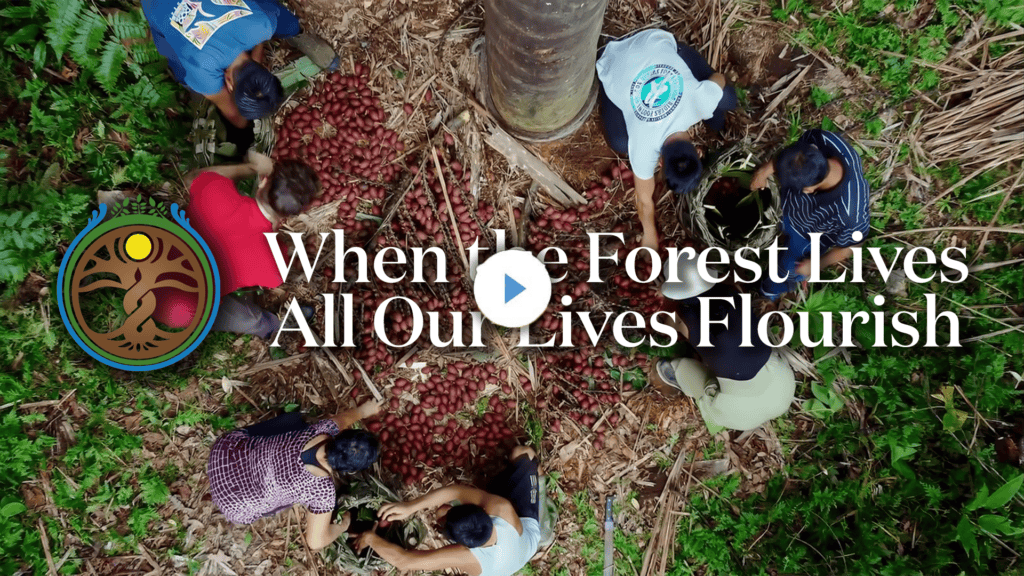
The Chaikuni Institute: Reciprocity in Action
This understanding is what led to the creation of the Chaikuni Institute – the Temple’s sister organization, devoted to the regeneration of Amazonian land and the communities that call it home.
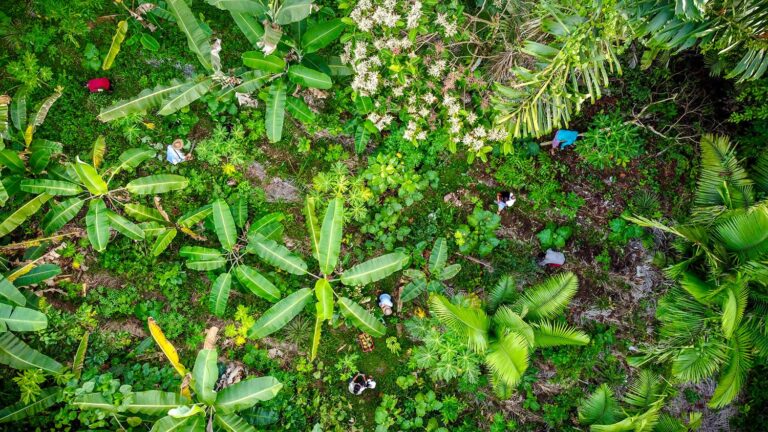
Since 2012, Chaikuni has worked to research and revive harmonious, productive methods of interacting with the environment through a model called the chacra integral – a holistic, highly biodiverse farm that combines traditional Amazonian cultivation practices with a permaculture-inspired agroforestry method from Brazil.
Rather than clearing and burning, the chacra integral works with the natural stages of forest succession: planting pioneer species that rebuild soil fertility, fruit and palm trees that nourish the community, and long-lived forest giants that slowly rise toward the canopy, eventually hosting thousands of other beings.
The economic case is compelling. A single hectare of chacra integral yields an estimated tenfold increase in farmer income over ten years compared to slash-and-burn, with an initial investment that pays for itself within two to three years – while simultaneously providing food security, restoring degraded land, and sequestering carbon.
Sustainable Ayahuasca – Protecting the Source
At the heart of the chacra integral system is Banisteriopsis caapi, the ayahuasca vine.
As demand for the medicine grows globally, wild populations of the vine are increasingly under pressure. The Chaikuni Institute promotes the cultivation of ayahuasca as an integral part of the chacra model, generating vital income for local families, counteracting the overexploitation of the vine, and helping to preserve the ancient healing practices of the Amazon for generations to come.
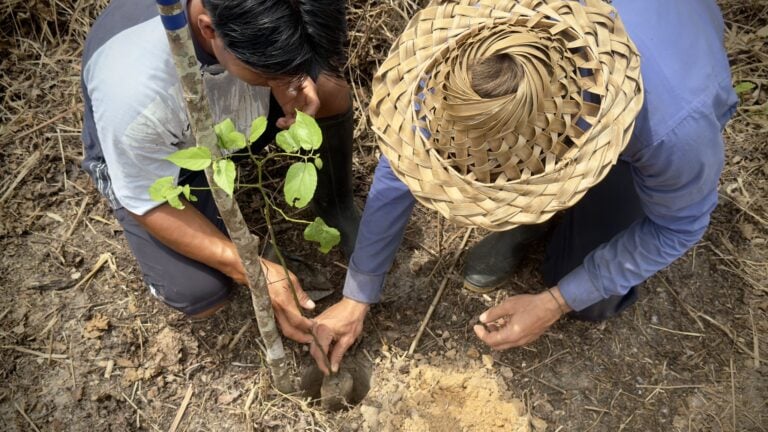
Since its inception, the Chaikuni Institute has planted over 1,800 ayahuasca vines on the land of the Temple of the Way of Light alone. Today, the vine grows across nine hectares of chacras integrales in communities throughout the region – and many families have begun planting it on their own land, some with Chaikuni’s support, and some entirely of their own initiative.
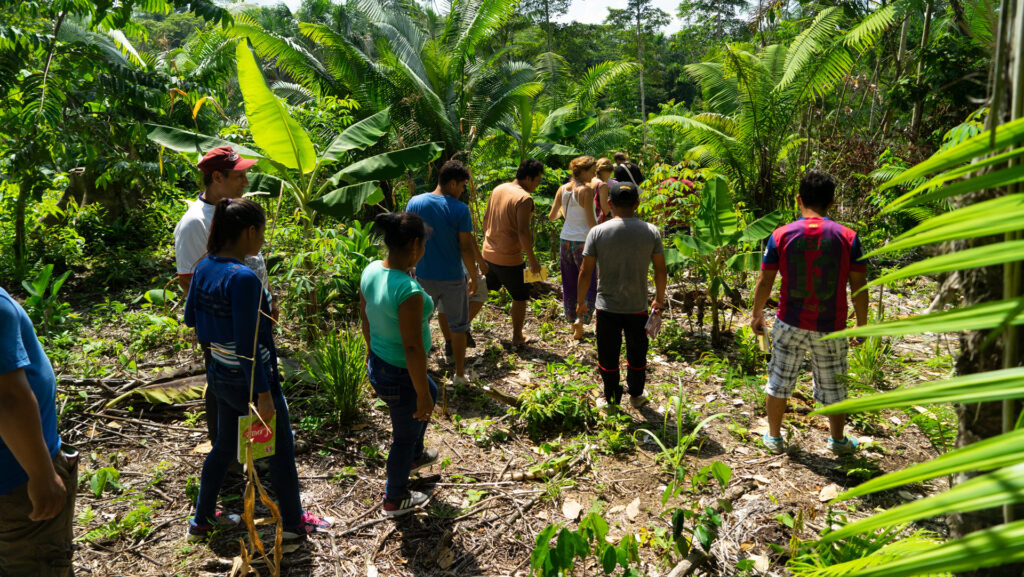
Impact and Vision
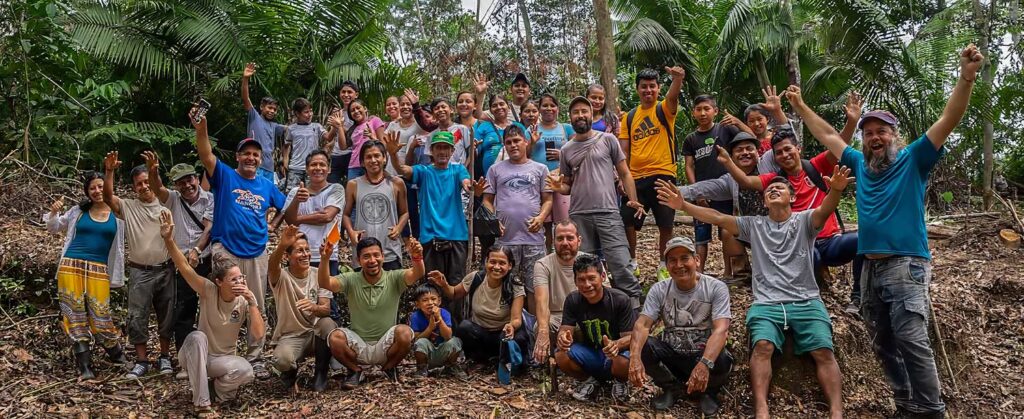
Today, 50 families across 10 communities are practicing regenerative agroforestry on their own land – not because someone told them to, but because they have seen, touched, and tasted what is possible.
More than 4,000 seedlings of 70 native species are produced and distributed every year across 9 hectares of living agroforestry plots and 20+ hectares of regenerating secondary forest.
Indigenous women of the Kukama Huyanakana organization are trained as community leaders and promoters, carrying this knowledge into six communities along the Marañon River. Annual Dialogue of Knowledge gatherings bring together indigenous elders, researchers, and technical experts – not to lecture, but to listen to one another.
By 2030, the Chaikuni Institute’s vision is:
- To train more than 300 families across 30 communities in regenerative agroforestry.
- Produce 12,000 seedlings of at least 80 species each year,
- Invite 60 young Amazonians annually to a long-term training program.
This is not charity. It is a return to balance.
An Invitation to Participate
As the popularity of ayahuasca grows across the planet, Ayni asks something of all of us – whether we have sat in ceremony deep in the Amazon or encountered the medicine’s influence from afar. The medicine does not belong to any one person or organization. It belongs to the forest, and to the people who have tended it since time beyond memory.
Supporting Chaikuni’s work is one way to participate in this reciprocity – to honor what you have received, whether that was healing at the Temple, a ceremony elsewhere, or simply the air we breathe. The forest already knows how to heal itself, given the chance. The work is simply to stand alongside it.
To learn more or to support Chaikuni’s work:
Support the reforestation work
With love and gratitude,
The Temple of the Way of Light