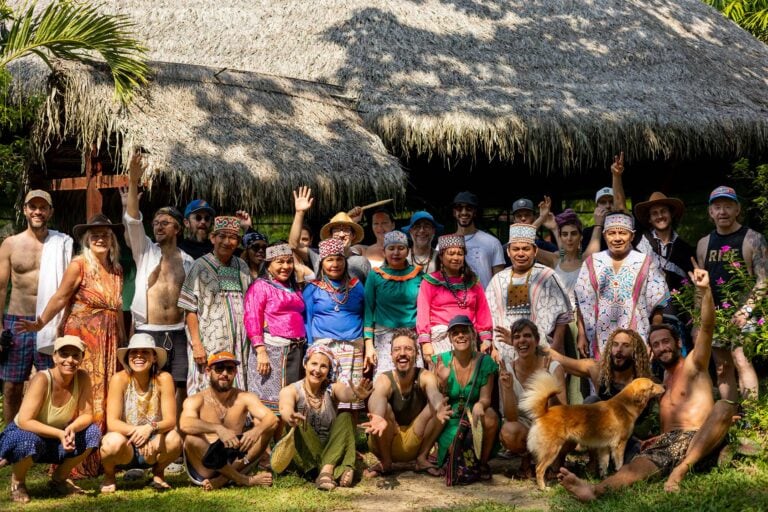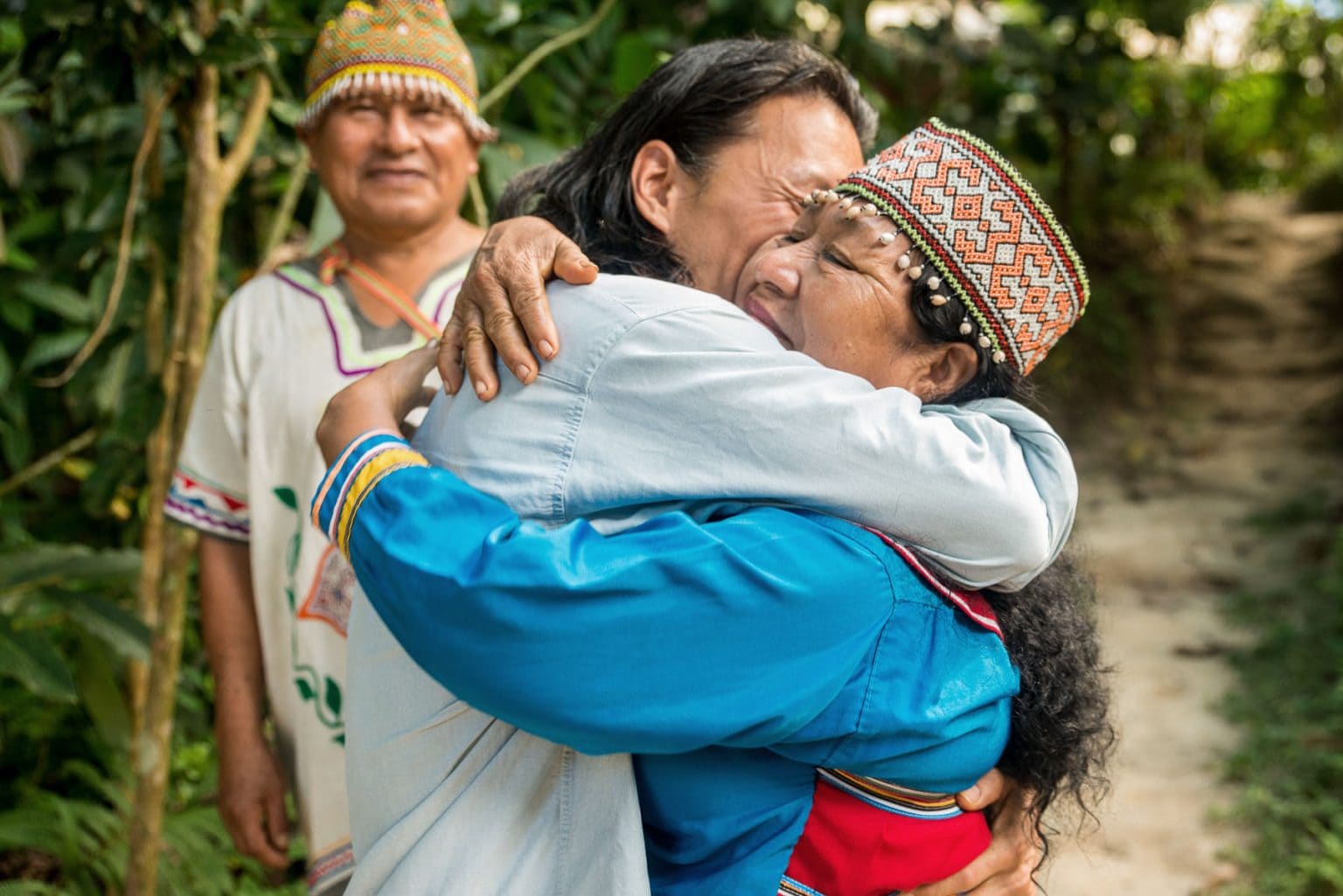
It is entirely natural to feel fear before you arrive. When you are preparing to step into a process as deep as the Shipbio tradition, fear and uncertainty are often the first things to show up.
We don’t see these fears as obstacles to be pushed aside. They are actually the beginning of your healing. Whether you are worried about losing control, facing parts of yourself you’ve kept hidden, or the physical reality of the purge, you aren’t alone in those thoughts.
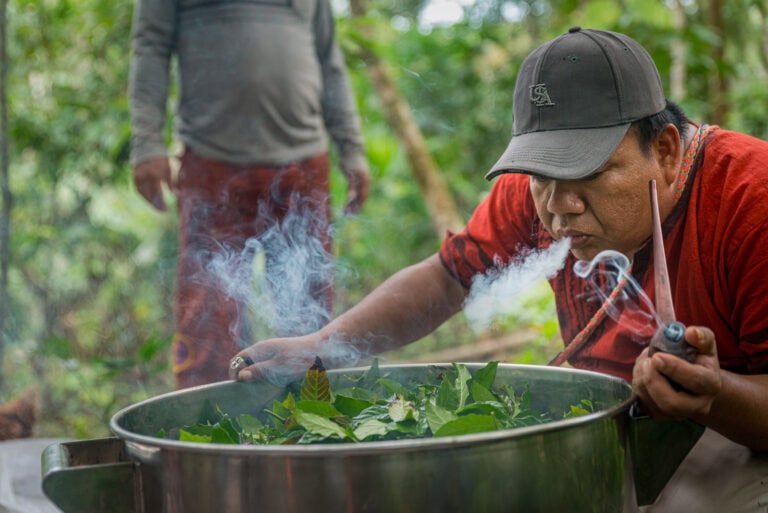
We work closely with the Shipibo Onanyabo to ensure that each guest, the ceremony space, and the entire retreat process are held with integrity. Their mastery of the Ikaros creates a safe, grounded, and trauma-informed environment where you can actually do the work of evolution.
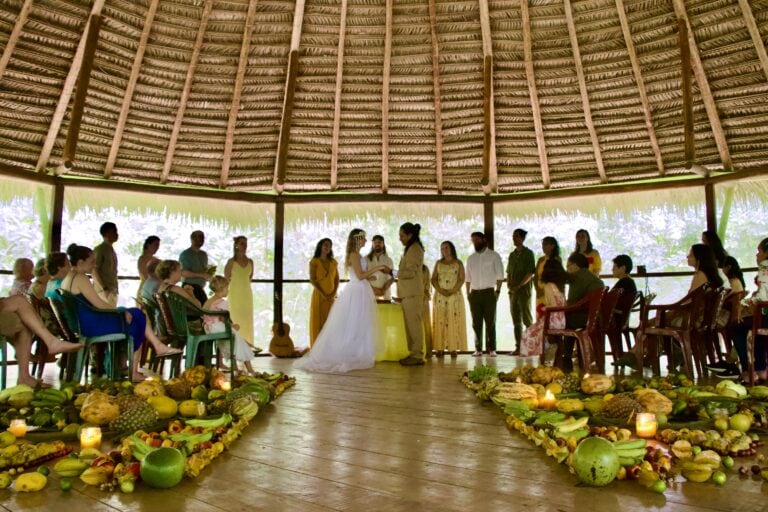
You don’t need to have everything figured out before you get here. You don’t need a perfectly polished intention or all the answers. All you need to bring is your sincerity and a genuine willingness to learn from the plants. The rest happens in the Maloca.
Common Fears and Anxieties
Many people preparing for their first ayahuasca retreat wonder: Is it safe? Will I lose control? What if something goes wrong?
If you are feeling some fear, nervousness, or uncertainty about attending an ayahuasca retreat, you are not alone. Many people arrive with a mixture of curiosity, hope, excitement, and doubt. These feelings are a very natural part of approaching an experience that can feel both meaningful and transformative, yet unknown.
Readiness does not always feel calm or certain. It may include hesitation or fear. At times, fear can even be understood as a form of reverence for the depth of the process one is approaching.
Here are seven of the most common concerns we hear from first-time visitors:
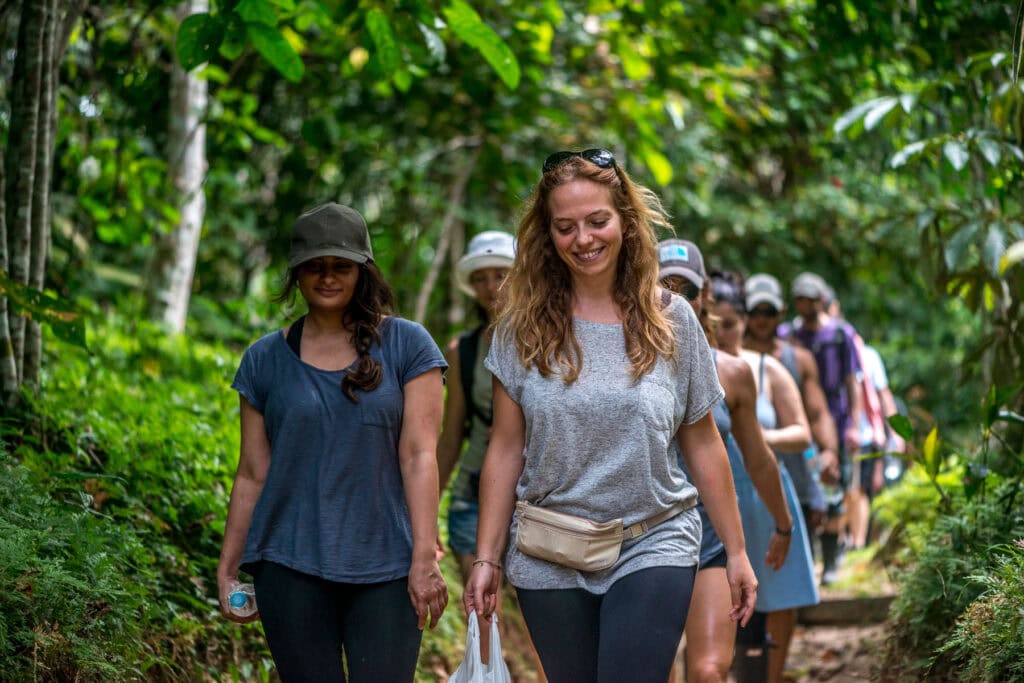
1) Fear of Losing Control During an Ayahuasca Ceremony
Some people worry about what it might feel like to enter a non-ordinary state of consciousness. They may wonder if they will lose control of themselves or behave in ways they normally wouldn’t.
While the experience can feel unfamiliar at times, you are not unconscious or disconnected from yourself. Most people remain aware of where they are and can ask for support if they need it. Our team is present throughout the ceremonies to help hold a safe and supportive space.
At the Temple, ceremonies are held within a carefully guided structure. The amount of medicine is gradually increased, with attention to each person’s sensitivity. Some people feel the medicine very strongly even with a small amount, while others need more time to connect. Because of this, the process is approached step by step.
The Shipibo healers who guide our ceremonies bring decades of training and a lifetime of relationship with the rainforest. Through their icaros – sacred plant spirit songs – and the authority of their presence, they tend to the energetic space of each ceremony and offer careful, attentive support to each person’s individual process.
Many Amazonian traditions that work with this medicine understand the experience as unfolding in relationship with a deeper inner wisdom. When held by experienced healers, ayahuasca brings what a person needs and is ready to meet in that moment, which is not always what one might expect or want.
The vast majority of guests later share that what arose during their ceremonies – even that which was challenging in the moment – felt deeply meaningful and connected to their own inner process, rather than random or overwhelming.

2) Fear of Difficult Emotions
Another common concern is the possibility of encountering challenging emotions or memories during the process.
Working with ayahuasca often brings forward aspects of ourselves that are ready to be seen, felt, or understood more deeply. While this can sometimes be intense, it is an essential and welcome part of the healing process.
True healing rarely happens in isolation. In trauma-informed work, we understand that deep healing unfolds when a person feels genuinely held – seen, understood, and not left alone with their experience.
Every element of the ceremonial space is designed with this in mind. Our healers and facilitators – all of whom have navigated their own deep challenges – bring real compassion and lived understanding to their role. The group’s shared journey adds a layer of support and a reminder that no one walks this path alone.
Difficult moments are not minimized at the Temple. They are met with steady presence, genuine care, and no judgment. Many people find that when emotions are allowed to move and be integrated, held in a truly supportive environment, they become a doorway to insight, relief, and a deeper, more honest relationship with oneself.
3) Fear of Being in a Group Setting
Another concern some people have is the idea of going through this experience in a group setting. For people who are more private, introverted, or who experience social anxiety, the thought of being around others during such a personal process can feel uncomfortable.
During an ayahuasca ceremony, the space is quiet and introspective. There is no talking during the ceremony unless someone needs to ask the team for support. Most people spend the night on their mat, eyes closed, focused on their inner process.
Outside of ceremony, the retreat structure also allows space for solitude. Each guest stays in their own tambo (private hut), which becomes a crucial place for rest, reflection, and integration. At the heart of a meaningful ayahuasca retreat is balance – time for stillness and inner reflection, woven together with gentle, nourishing moments of community and shared humanity.
Most mornings after the ayahuasca ceremony are held in silence, and a silent table is also available during meals for those who wish to continue resting in a quiet space.
At the same time, there are opportunities to connect with others if you wish. Guests often speak with one another during meals, and there are a few sharing circles where people can express and reflect on their experiences if they feel comfortable doing so.
Because everyone arrives with a sincere intention to look inward and grow beyond old patterns, the group setting also often plays an important role in the healing process. The space is held with care, respect, and clear boundaries, which allows people to feel safe in their vulnerability.
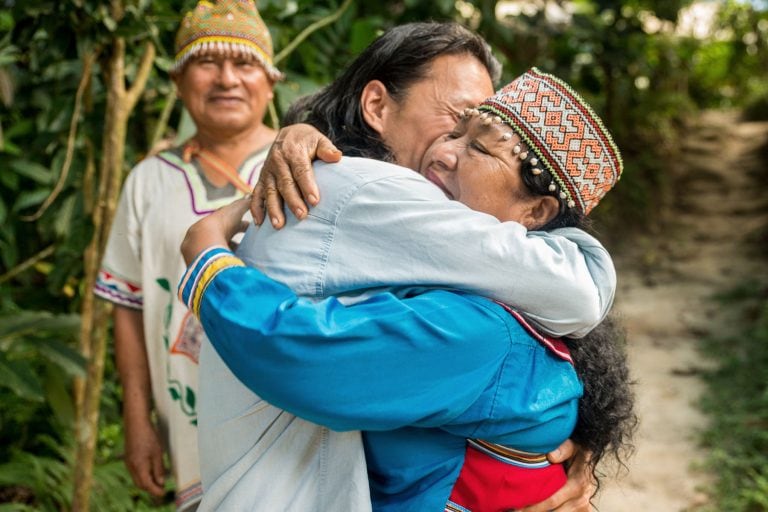
Many guests share that they experience something unexpected: a sense of belonging to a community where they are seen, both in their struggles and in their beauty. Through witnessing one another’s journeys, meaningful connections and bonds can naturally form.
Often, people discover that what they once believed was “just me” – the harsh inner voice, the self-criticism, or the feeling of having a “crazy mind” – is actually something many others recognize as well. In these moments, people realize they are not alone with their thoughts and patterns, and this shared understanding can be deeply healing. It could also be the beginning of healing our deep sense of shame.
In many healing traditions, as well as in modern trauma-informed work, there is an understanding that healing happens both within ourselves and in connection with others.
There is a simple paradox of healing: no one can do the work for us, and at the same time, we cannot do it completely alone. One nervous system is often not enough to heal deep wounds.
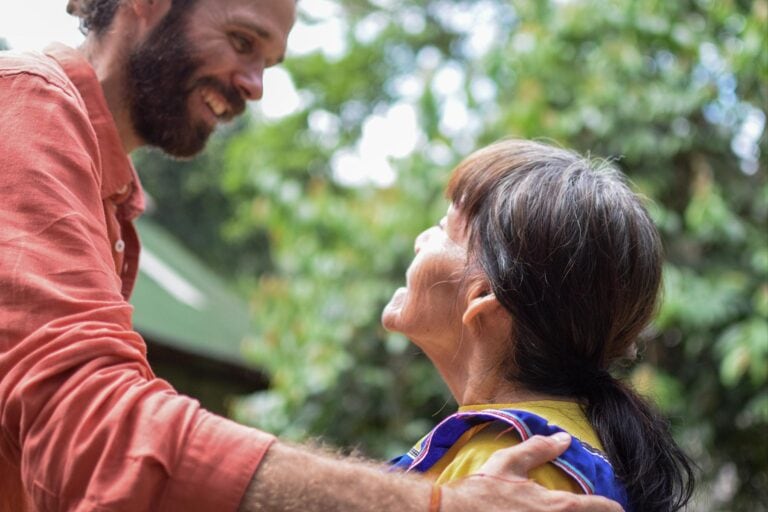
Within a respectful, well-held group, people often discover the power of being witnessed and supported as they walk their own path.
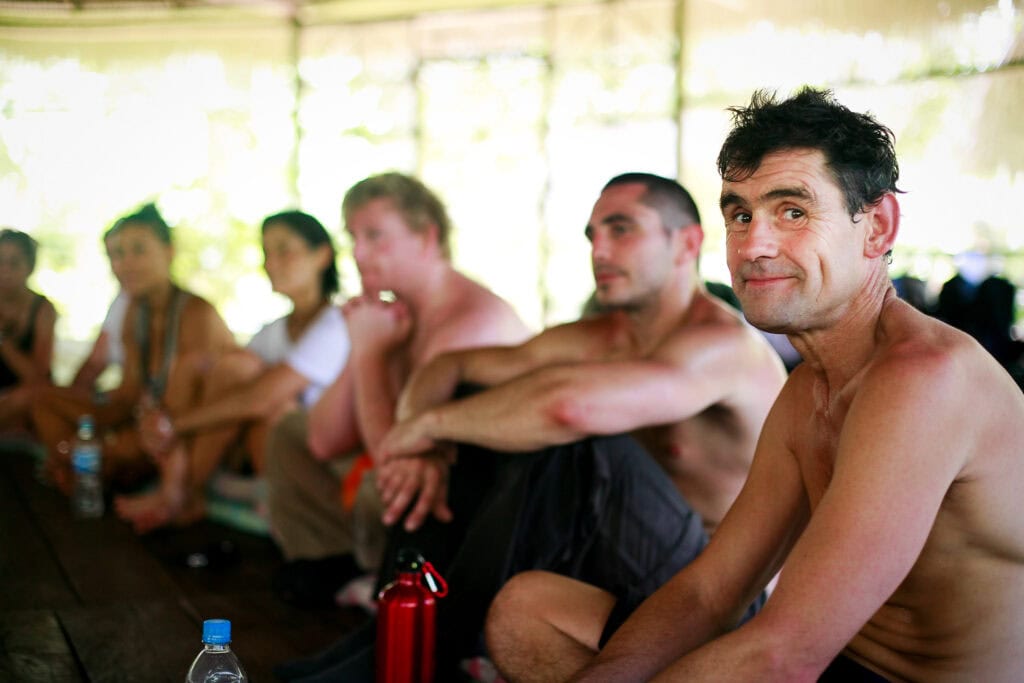
4) Fear of Purging
Many people have heard that purging can happen during ayahuasca ceremonies and feel anxious about it beforehand.
Purging is a natural and traditional part of working with this medicine. While it can include vomiting, it can also take other forms, such as yawning, sweating, shaking, crying, or emotional release.
Within Amazonian traditions, purging is often understood as a way the body and the energetic system release what is no longer needed. Although it may feel uncomfortable in the moment, guests later then experience a sense of profound relief, lightness, or clarity.
Purging is one of the most misunderstood – and most sacred – aspects of the ayahuasca experience. Far from something to fear, it is the body’s way of releasing what no longer serves us: the “backpack” of accumulated weight of old pain, unprocessed grief, and trauma we have carried – often unknowingly – for years, sometimes decades.
It is, in the most profound sense, an act of liberation.
5) Fear of “Losing One’s Mind”
One of the deepest fears people carry into their first ceremony – often unspoken – is the worry that they might lose their mind during the experience and not find their way back.
Set and Setting
Safety begins with structure, experience, and energetic integrity. Ceremonies at the Temple are held within a carefully tended environment, guided exclusively by advanced Shipibo healers who are directed by the plants themselves – attuned to each person’s journey and entrusted with the energetic integrity of the space. A dedicated team of trained facilitators is present throughout the entire night. No one is ever left alone in a difficult moment. Support, grounding, and compassionate guidance are always within reach.
For most guests, what felt frightening in anticipation becomes, in hindsight, one of the most meaningful passages of their lives.
What a “Mental Purge” Really Is
Ayahuasca opens deep emotional and psychological terrain. Occasionally, this includes what we call a mental purge – not a breakdown, but a profound cleansing. Buried patterns, limiting beliefs, and unresolved trauma are brought to the surface to be witnessed, processed, and released at their very roots.
This is not the mind unraveling. This is the psyche finding its way back to wholeness and alignment. This process is sacred and well understood within Indigenous traditions – honored, not feared, as a necessary passage of healing.
For the vast majority of guests, this process completes itself naturally within the retreat container. In extremely rare cases – fewer than 1% – the acute phase continues after returning home. This, too, is still the process at work as the ikaros continue reaching to the roots of trauma.
These experiences, sometimes called “spiritual emergencies”, are deeply recognized within Indigenous cultures, though they remain largely misunderstood by mainstream psychology. For those who need additional support, our team of integration specialists – seasoned in spiritual healing processes – is available for one-on-one guidance, alongside remote shamanic support from our healers, accompanying each person through to resolution.
6) Fear of Not Having an Experience
Some guests arrive worried that nothing will happen for them, or that they will somehow “do it wrong.”
There is no right or wrong way to have an ayahuasca experience, provided you are working with highly experienced practitioners. Nothing you do in a ceremony is wrong – there is always something to learn. Each person’s relationship with ayahuasca unfolds in its own timing and in its own way. For some people, the experience is very visual, while for others it is quieter and more subtle.
Sometimes the most meaningful insights arise gradually, during the days of the retreat or in the weeks and months afterward as the process integrates. Trusting the process and allowing the experience to unfold naturally is often more helpful than trying to force something specific to happen.
7) Fear of Losing One’s Drive or Identity
Another fear we sometimes hear, especially from people who are very driven or used to living with a strong sense of purpose, is the worry that working with ayahuasca might change them in ways they do not want.
Some people wonder whether they might lose their motivation, or whether the experience might make them less focused or less engaged with their lives.
In our experience, this is rarely the case. More often, people find that the process helps them reconnect with a deeper clarity about what truly matters to them. Rather than taking away a person’s drive, many feel it helps them focus more on what feels meaningful and authentic in their lives.
Ayahuasca is Not a Miracle Cure
Ayahuasca healing, guided by trained shamanic practitioners, is a profound and deeply personal journey – but it is not a cure-all. As with all forms of healthcare, each person arrives with their own unique story: their medical history, life experiences, and the weight of the challenges they carry. No responsible practitioner can ever guarantee a specific outcome.
What we can speak to is nearly two decades of facilitating deep healing. In our experience, approximately 90% of our guests report meaningful and lasting change in their lives – a testament not only to the healers and the plant medicines, but to the courage it takes to show up for oneself.
This research carried out at the Temple supports the depth of healing that we have had the privilege of witnessing.
A Final Word
Although each person’s journey is unique, these kinds of fears and questions are far more common than most people realize. Many guests arrive carrying similar uncertainties.
Over time, most discover that the process is not about pushing beyond one’s limits but about meeting oneself with honesty, patience, and care. Fear, curiosity, doubt, and hope can all exist together as part of the same doorway.
You do not need to arrive without questions or uncertainty. Simply coming with sincerity, respect for the process, and a willingness to learn is more than enough.
If you’re preparing for your first retreat, you may also want to check our first-time visitors’ guide.