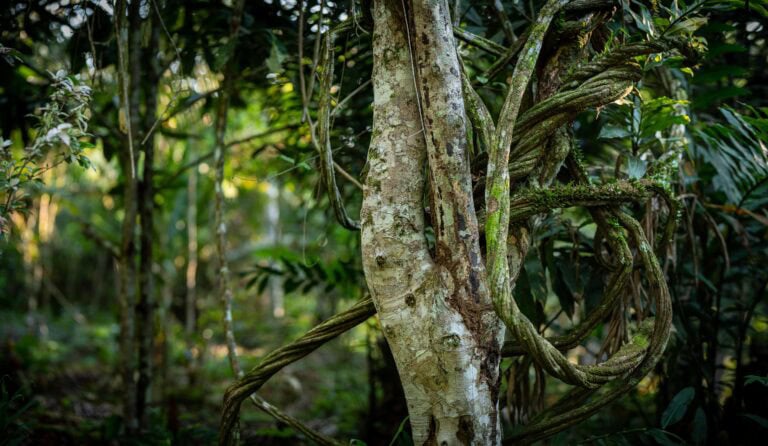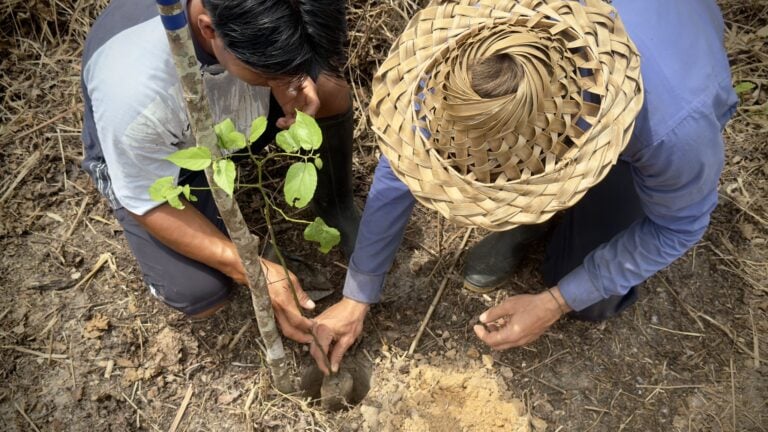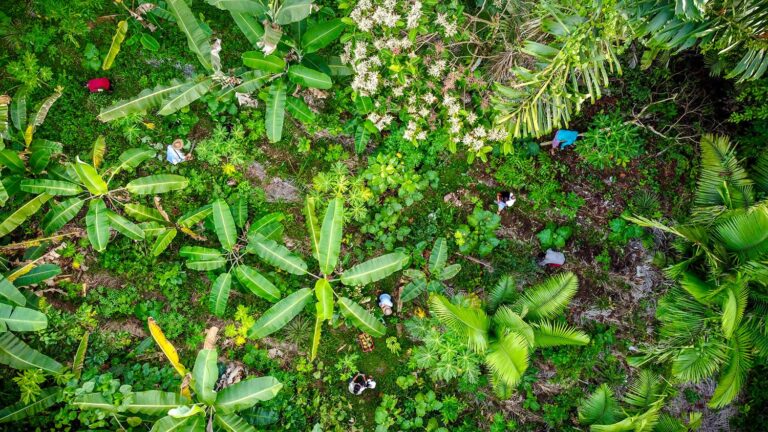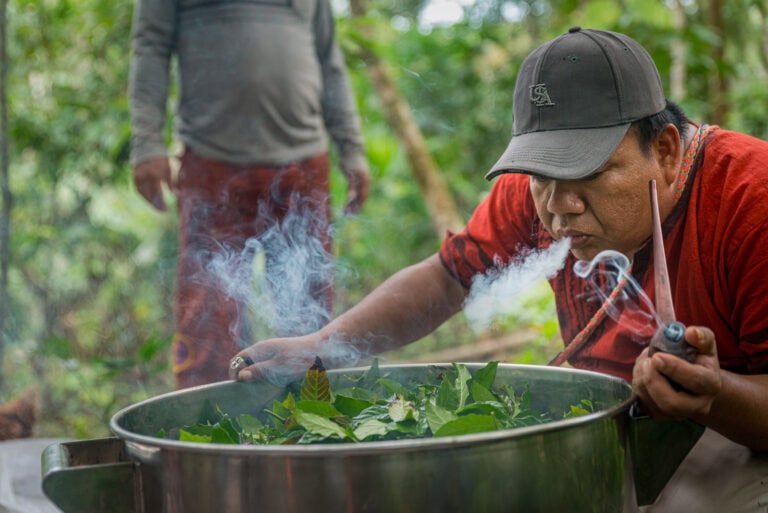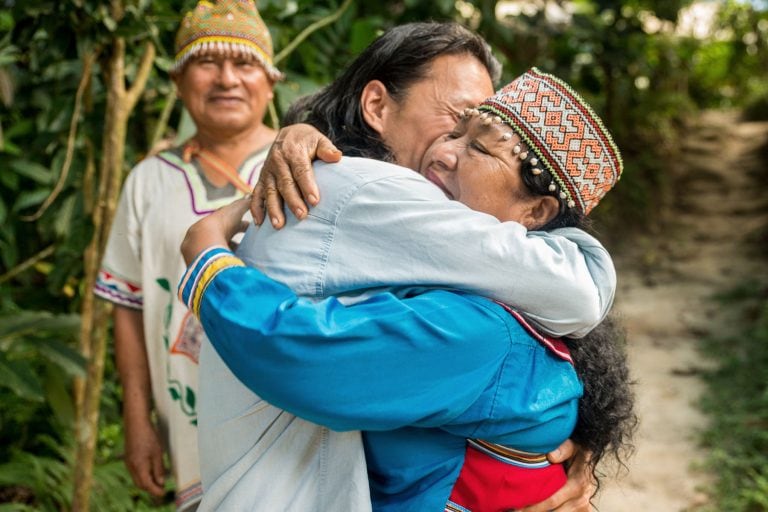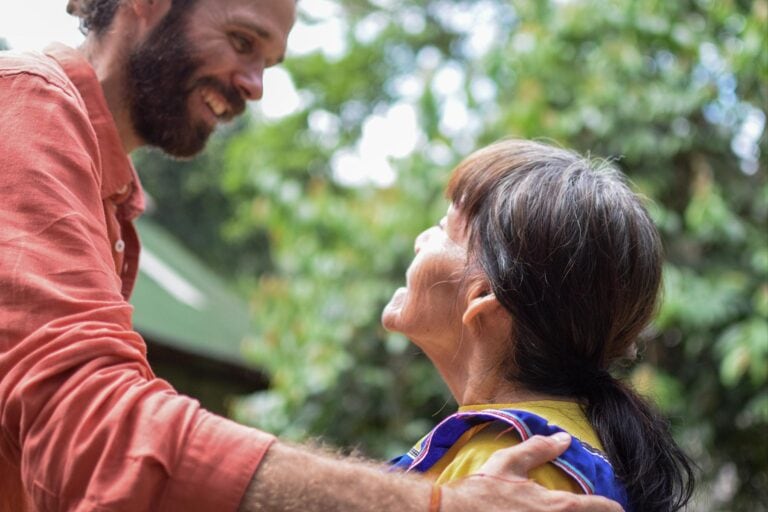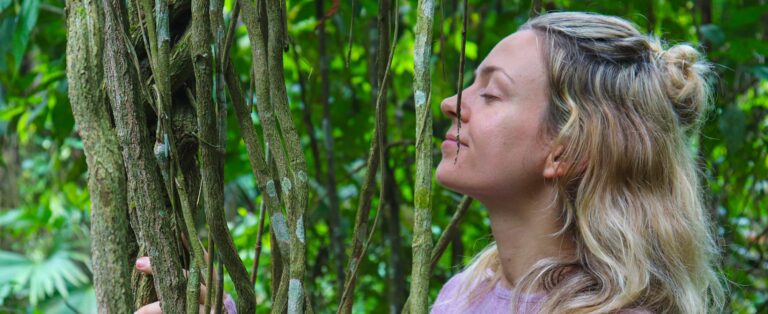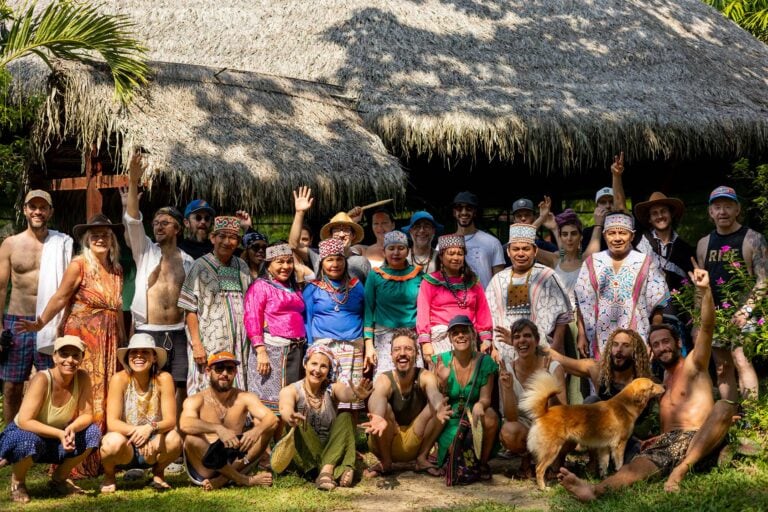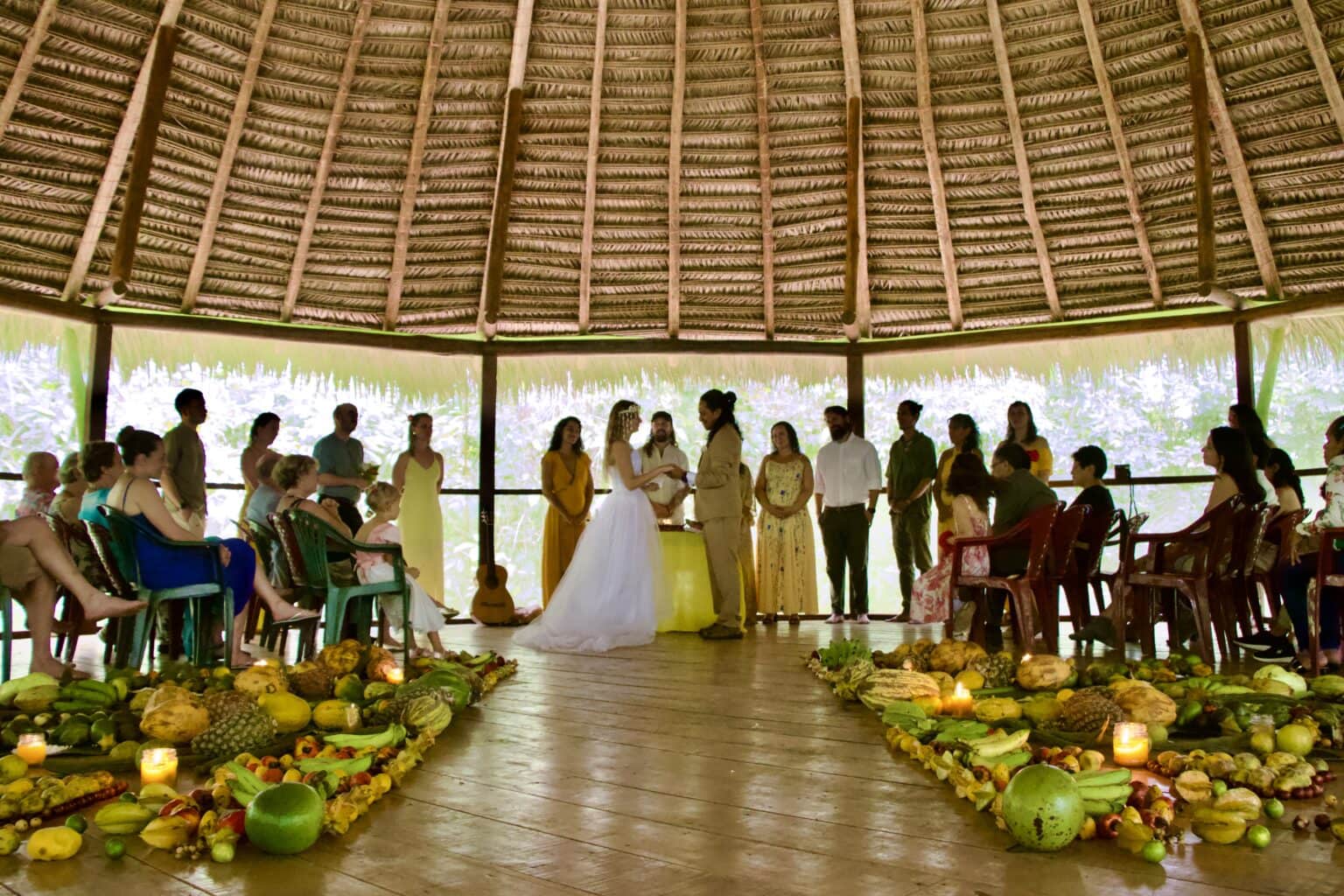
On November 23, 2025, we were married in the Amazon, surrounded by family, friends, community, and forest.
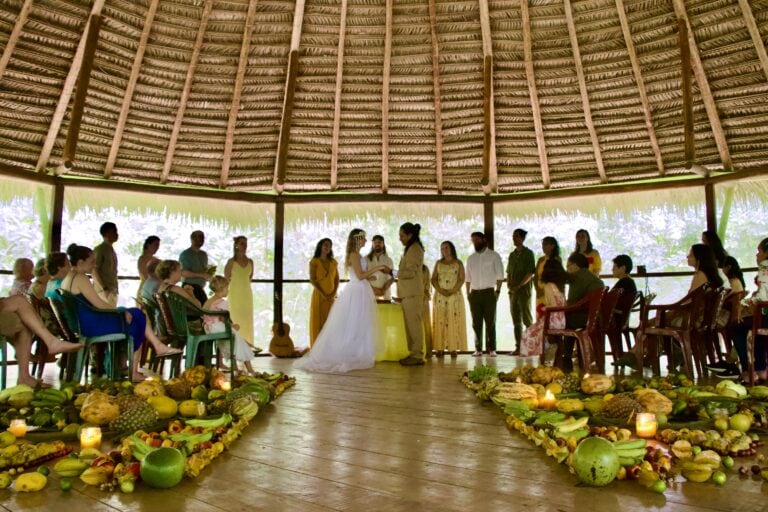
Our ceremony took place in a maloca at the Temple of the Way of Light, sister organization of the Chaikuni Institute, in the wider place we call home.
We chose to marry here because this is where our life is truly happening: where we live, where we work, where we care for the land, and where we are building family and community together.
For us, Buen Vivir is not just an idea. It is a way of living in relationship – with one another, with community, with nature, and with what is sacred in everyday life. It is not about having more. It is about belonging more deeply.
Returning to the Source
Some weddings are held in places chosen for their beauty.
Ours happened in a place that was already carrying our lives.
We did not want to marry in a space disconnected from our daily reality.
We wanted to marry where we wake up in the forest, where we share work and meals, and where we are learning what it means to live well together.
When life brought us back together after years of distance, it did not feel like beginning from nothing. It felt like returning to something that had remained alive underneath time. By the time we chose to marry, we were not only choosing each other; we were choosing a life:
- Closer to the earth.
- Of service and community.
- Shaped by gratitude.
Entering into Abundance
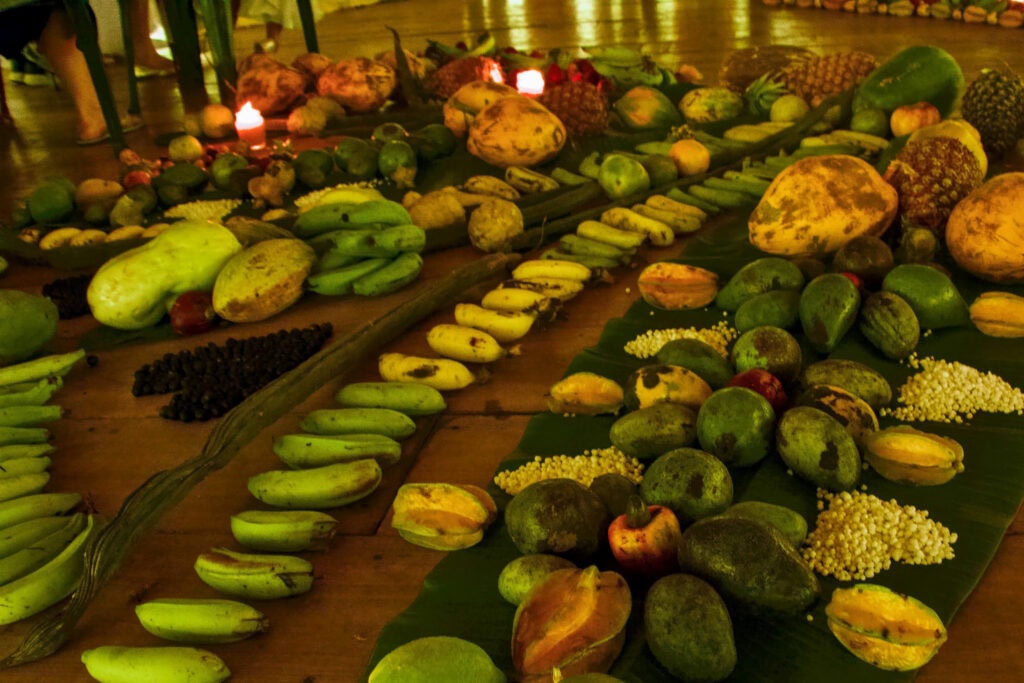
Before the vows, our padrinos prepared the ceremony as a surprise. When we entered the maloca, we found the space transformed by a large mandala spread across the floor, made from:
- Fruits and flowers.
- Medicinal plants and candles.
- Harvest from the chacras of Centro Chaikuni.
- Offerings brought by local neighbors from their own harvests.
What we saw was not decoration. It was an offering. It was abundance made visible through relationship. In many places, abundance is confused and measured by accumulation. But the abundance we saw that day came from the forest, from the chacras, from care, and from reciprocity. Buen Vivir teaches us that a good life is not built by extracting from the world, but by entering into right relationship with it.
Family, Community, and One Circle of Life
Our families traveled from Brazil and Peru. Friends came from nearby villages, the Temple, and Chaikuni. One of the deepest gifts of that day was that the usual “compartments” of life disappeared.
Many people today feel their lives are split: work in one place, family in another, nature somewhere else. On this day, everything belonged together.
- The Forest: Remained all around us; the maloca stayed open to the green world.
- The Generations: Children moved freely while elders spoke.
- The Spirit: Celebration was not an escape from life, but an expression of it.
Vows, Tears, and the Humble Work of Love
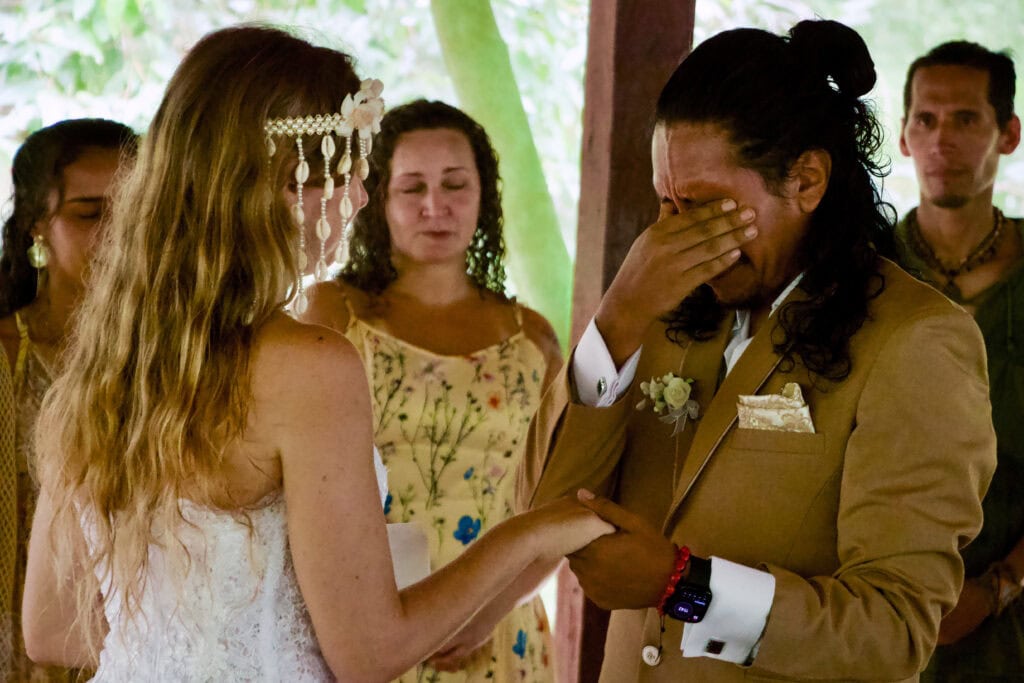
When we spoke our vows, it was the feeling of standing inside something we had hoped for, and could now bless publicly. We included a simple gesture: we washed one another’s feet.
This expressed something essential: Love is not sustained only by beautiful moments. Love also asks for:
- Humility and tenderness.
- Service and daily care.
- The ordinary decision to repair.
To us, love is more like a garden than a possession. It is alive. It passes through seasons. It requires the same reciprocity and patience as the forest itself.
The Dance of Peace
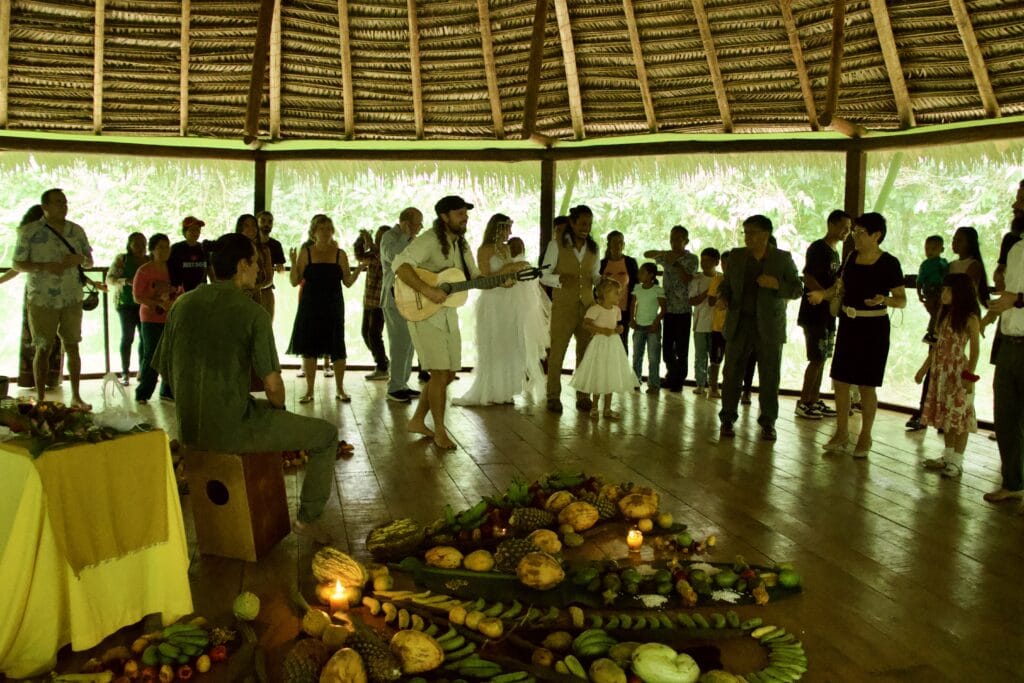
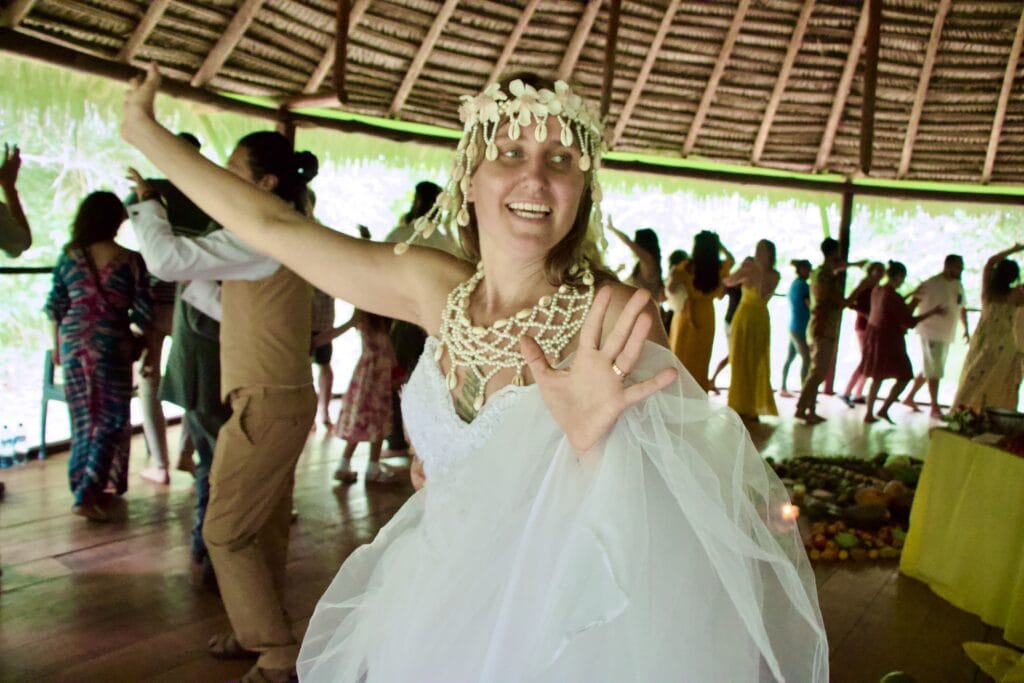
After the vows, a peace dance began around the mandala. People formed concentric circles – relatives, local friends, companions, and children.
That dance felt like Buen Vivir in motion.
Joy was shared, not consumed. Community was felt, not discussed. Peace became a rhythm of steps and smiles. We believe many people are hungry for exactly this: ritual that still feels alive.
What This Day Taught Us
We share this story because the day helped us see that Buen Vivir is built in practice. It is built when:
- Love is rooted in place.
- Community is people bringing fruit and dancing together.
- Nature is not a backdrop, but part of the family story.
- It is built when we stop separating the “rooms” of our lives.
Marriage did not make our life complete; it deepened our responsibility to care for the life we are growing. The most meaningful celebrations are the ones that bring us back to what truly sustains us: Back to gratitude, back to relationship, back to the earth, back to community, back to love as a living practice – back to Buen Vivir.
Written by Diego and Techi