Traditional Medicine of the Amazon Rainforest
As ayahuasca spreads across the world, a question has never mattered more: who has the right to hold this medicine, and what does it actually take to do so responsibly?
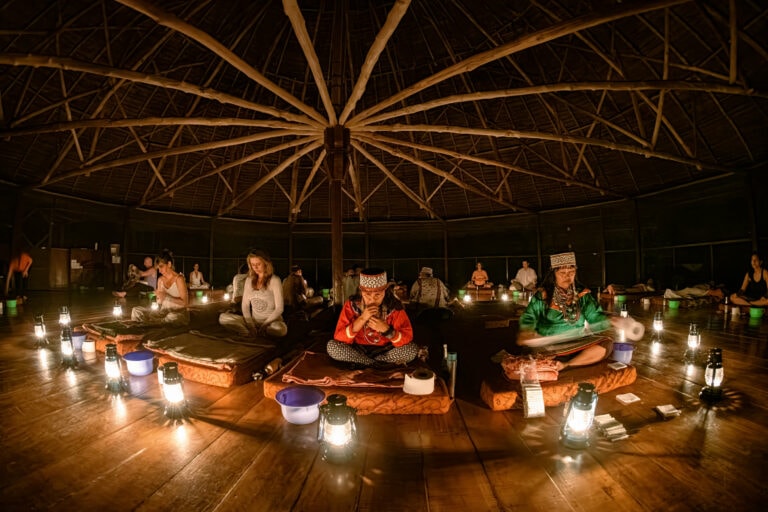
At the Temple of the Way of Light, our work is rooted in traditional Shipibo curanderismo – one of the most sophisticated indigenous healing systems on earth. This page exists to share what we have learned over nearly two decades, and to offer a genuine compass for anyone seeking to understand the Ayahuasca traditions more deeply.
Amazonian Curanderismo: An Ancient System of Healing
Amazonian healthcare is neither modern nor an alternative practice. It is an ancient system of spiritual healthcare that predates conventional medicine by millennia – a living science, developed and refined across countless generations of people who have worked with the medicinal plants and trees of the rainforest.
Indigenous peoples across the planet have maintained a profound relationship with the natural world, understanding nature as conscious and intelligent. In the Amazon, this understanding evolved into curanderismo – a complete system of diagnosis, treatment, and healing that operates in the realm of energy and spirit.
The Temple works specifically within the Shipibo tradition of curanderismo in the Peruvian Amazon. What follows reflects a broader perspective on Amazonian ayahuasca healing – a living practice carried by many different indigenous tribes and mestizo peoples across the Amazon, each with their own distinct traditions, languages, and ways of working with the medicine.
Understanding the Different Types of Healers
One of the most common sources of confusion – and one of the most consequential – is the difference between an ayahuasquero and a curandero.
Ayahuasqueros
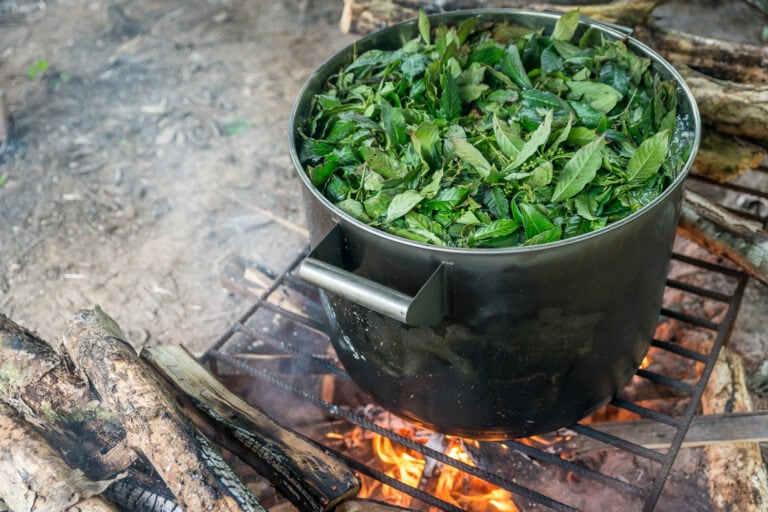
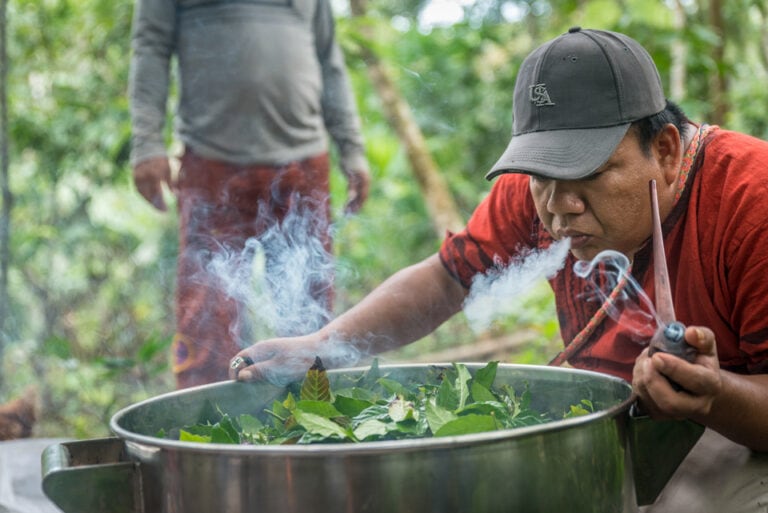
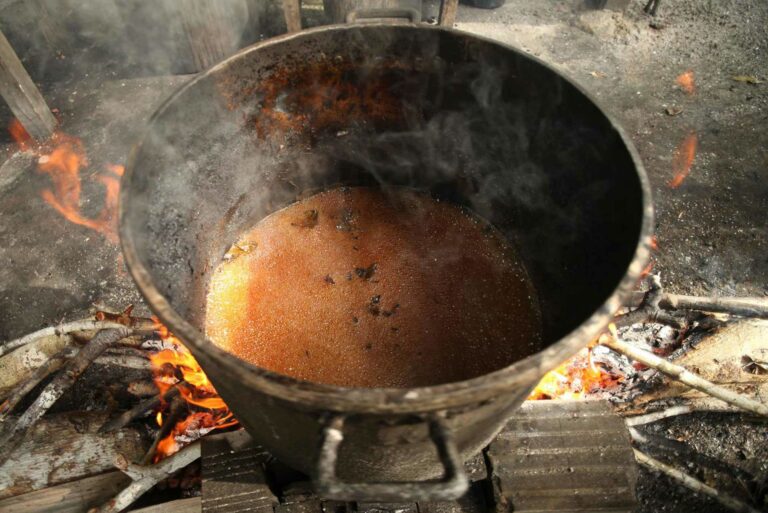
An ayahuasquero is someone who can prepare and cook ayahuasca. This is a skill – but it is not the same as healing. An ayahuasquero who holds ceremonies without a trained curandero present cannot work shamanically on guests’ energies, cannot manage the medicine to maximize healing, and risks being overwhelmed if serious energetic issues arise.
In traditional Amazonian communities, people will sometimes go to an ayahuasquero for a purge – but never for the deeper healing of serious issues. Any healing that occurs in a ceremony without a curandero emerges solely from the medicine itself. There is no healer present to guide, protect, or direct the process.
An ayahuasquero of integrity will refer anyone with serious issues to a curandero. Not all do. Some ayahuasqueros are also curanderos – but the distinction matters enormously, and it is rarely made clear.
Curanderos – The Healers
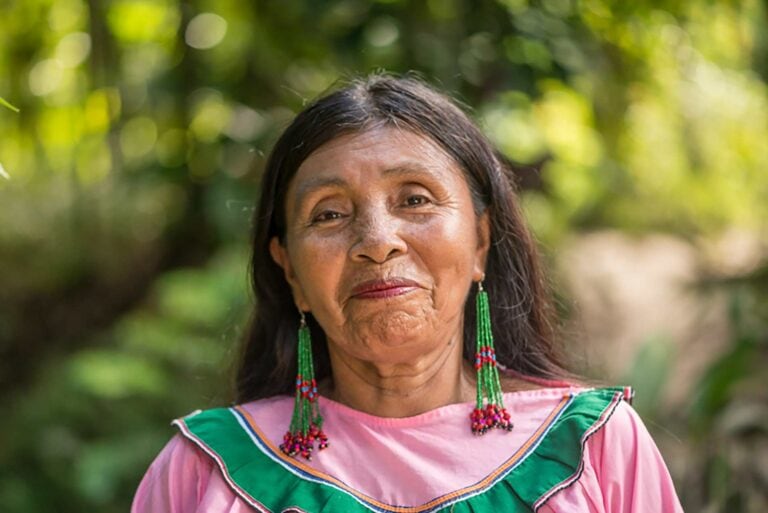
A curandero is a healer. In Shipibo, a curandero is called an Onanya – one who has wisdom. To become a true Onanya, the initial apprenticeship lasts around ten years and continues for life.
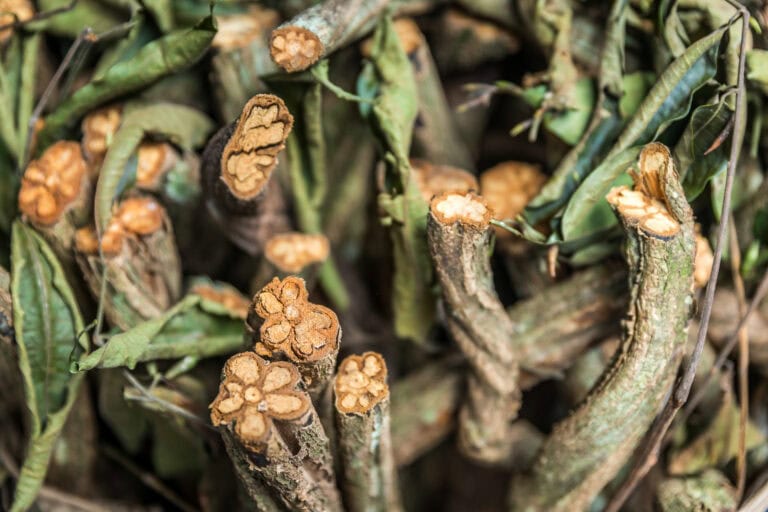
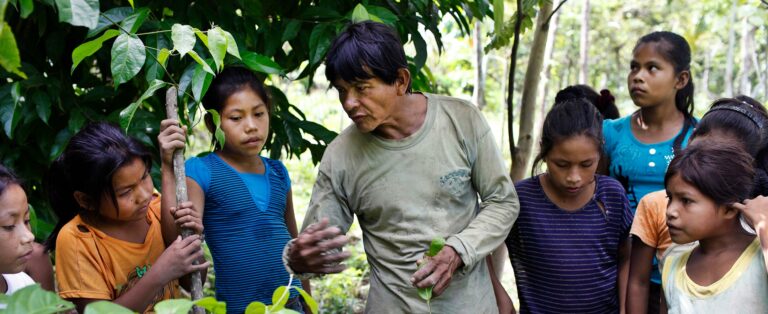
Curanderos are trained directly by the plant spirits through many sama – master plant and tree dietas – carried out over many years, often decades. These dietas fill the curandero with energetic medicine from the plants and trees they diet. This medicine is then transmitted in ceremony through ikaros – the sacred songs of the plants.
True curanderos must be able to face the darkest energies when working on patients. The training is extraordinarily demanding – filled with tests, sacrifice, and challenges designed to stretch the apprentice far beyond ordinary endurance, up to and including the experience known as shamanic death: not the ego deaths commonly encountered in early healing work, but something far more profound. It is common for only a small number of apprentices to reach the level required to identify the deep roots of disease and work effectively to heal them.
The Temple works with a team of twelve Onanyabo – all highly trained, deeply experienced, and genuine Shipibo healers.
How Shipibo Healing Actually Works
Understanding how Shipibo healing actually works reveals just how much is lost when the ayahuasca tradition is reduced to a ceremony with a brew.
Ikaros – The Songs of the Plants
Ikaros are the songs of the plant spirits, transmitted through the healer during ceremony. It is the plant spirits who carry out the healing – the curandero is the conduit through which they work.
Ikaros can only come from years of dieting. They are not learned, memorized, or approximated – they are received. They serve many purposes: cleaning, opening, straightening, liberating, connecting, centering, protecting, and illuminating. They facilitate soul retrieval, drive the medicine deeper into the patient’s system, release energetic blockages, and guide a participant safely through their journey if it becomes overwhelming.
Without a trained curandero and their ikaros, a participant in genuine difficulty has no one who can truly reach them.
The curandero also uses ikaros to protect the ceremonial space – preventing heavy energies from transferring between guests, or from entering from outside. During an ayahuasca ceremony, when guests’ energy fields are significantly open and vulnerable, this protection is not symbolic. It is one of the most essential functions of the healer’s role.
A team of plant-spirit doctors can be brought into ceremony only by a curandero who has completed extensive dietas. Without this, there is only one doctor – ayahuasca itself. Every good hospital needs a full team.
Chupar and Soplar
Chupar – to suck – is used to extract particularly heavy, trapped energies from a patient. In serious cases, the curandero draws on mariri – a plant phlegm that develops in the stomach of the healer only after many years of dieting, and which represents the concentrated healing power gifted by the plants.
Soplar – to blow – is the transmission of plant-spirit medicine into the patient, directed into specific energetic gateways of the body: the tips of the fingers, the feet, and the crown. Like chupar, this capacity develops only after many years of devoted practice.
Tobacco
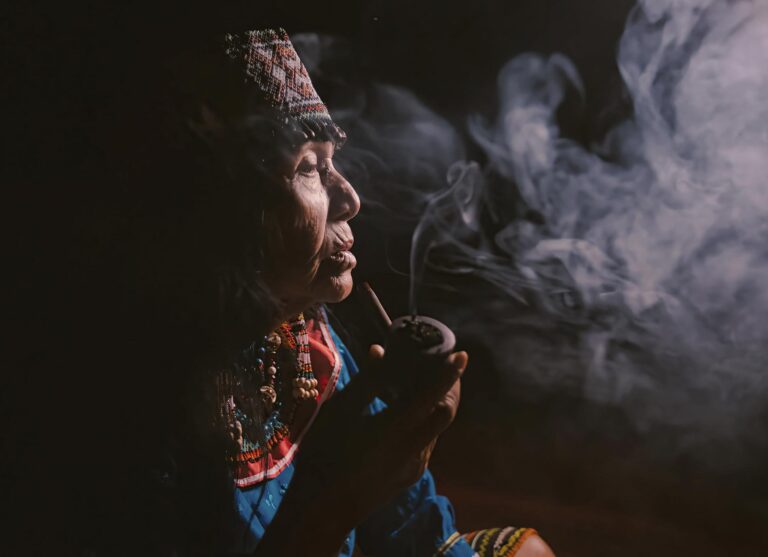
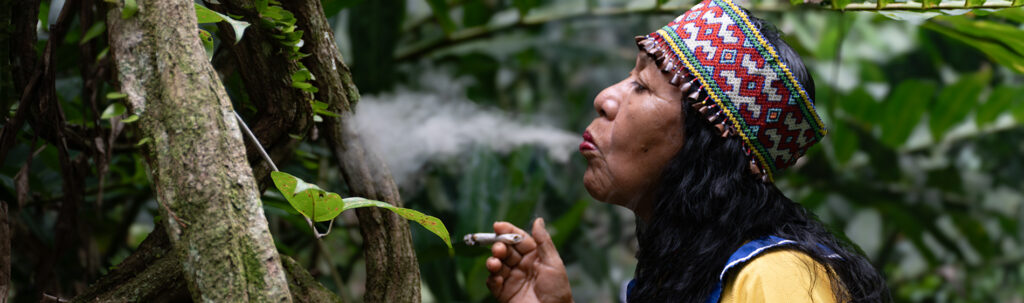
Tobacco is the sacred plant medicine of the Americas and is central to all authentic Amazonian curanderismo. It functions as a protector, a cleaner, a conduit, and a sustenance for the plant-spirit doctors. If a curandero is not working with tobacco, there is good reason to question whether they are a genuine plant-spirit curandero.
Other Ways of Working with Ayahuasca
The Neo-Shamanic Approach
A well-intentioned Western facilitator – operating with complete honesty, integrity, and sufficient safety protocols – can hold a positive, heart-opening space. But they must be clear with themselves and the participants in their ceremonies about exactly what they can and cannot offer.
Western ayahuasca ceremonies will not reach the depths, nor the roots of trauma, that a fully trained curandero with many years of dietas is able to heal. Soul retrieval, deep and lasting psycho-emotional healing, and energetic surgery require decades of shamanic training. There is a vast difference between chopping off the head of the weeds, which ayahuasca and other psychedelics can often do, and reaching deep into the tap-roots.
There are many different levels, stages, and dimensions to healing, and conflating them does a disservice to both the ayahuasca tradition and the people seeking genuine healing.
It is also essential that facilitators do not claim to be healers or shamans if they have not been genuinely trained over a sufficient duration in the Amazon. The word shaman, it is worth noting, is not native to the Amazon and is not a term used by the healers of the Amazon Rainforest.
The Psychotherapeutic Approach
As the psychedelic renaissance has expanded over recent decades, a growing number of Western medical professionals – doctors, psychiatrists, and therapists – have stepped into working with ayahuasca.
Many bring genuine care, rigorous training, and valuable therapeutic frameworks. What they rarely bring, however, is an understanding of the deeper dimensions of healing – namely, that the human body is fundamentally an energetic and spiritual system, and that lasting healing must address it as such.
Conventional Western medicine and psychology operate largely within a material paradigm. Amazonian curanderismo operates within an entirely different one, and the two are not easily translated into each other.
One of the most important and least understood aspects of this tradition is the relationship between the healer’s own energetic state and the quality of healing they can offer. A Shipibo healer cannot work with ayahuasca or heal others until they have sufficiently purified themselves of heavy energies and overcome any form of judgment toward others.
This is not metaphorical. Thoughts carry energy. Subconscious patterns carry energy. Jealousy, envy, and anger carry energy. If any of these are present in the healing space – in the healer – they directly affect the participant’s experience and healing process. This standard of energetic responsibility is one of the most demanding aspects of traditional apprenticeship, and one of the least visible from the outside.
That said, there is genuine and growing value in integrating Western psychotherapeutic approaches when working with Western guests. Traditional Amazonian healers work on the energetic dimensions of a person’s healing – but are often not positioned to support the psychological processing and integration that follows, particularly in cases of complex trauma. These are different but complementary dimensions of the same healing process.
The Temple’s facilitation and integration staff are trained in both Amazonian curanderismo and several Western therapeutic modalities to be capable of supporting and complementing the deep healing work of the Shipibo Onanyabo. We consider this combination – an advanced Shipibo healing practice supported by skilled psychotherapeutic integration – to represent the most complete conditions for lasting healing currently available.
Church Groups
Outside of traditional indigenous and mestizo healing practices, other approaches to working with ayahuasca have evolved – most notably in Brazil, where groups such as Santo Daime and the UDV (União do Vegetal) offer a syncretic religious framework that brings together Christian beliefs with the use of ayahuasca as a sacrament.
These churches are, by and large, focused on religious and community practice rather than healing. The Santo Daime church in the United States is explicit on this point – they do not offer healing and do not present themselves as a healthcare system. They work with ayahuasca as a sacrament, within a devotional context, and should be understood as such.
For those drawn to a spiritually oriented, community-based relationship with the medicine, these traditions offer a legitimate and well-established path. They are simply a different path – one that is not interchangeable with traditional Amazonian curanderismo.
How to Recognize a Genuine Practitioner
One of the greatest challenges of ayahuasca moving into the West is the transfer of a tradition rooted in shamanic communities to cultures with vastly different psychological, spiritual, and social values. Education is not optional here – it is the foundation of safe and respectful engagement with this medicine.
There are some genuine Western curanderos who have been authentically trained in the Amazon for many years. They are rare – and they are typically not the ones doing the most self-promotion.
The more common situation is a Western facilitator who has spent weeks or months in the Amazon and returned home claiming the title of shaman – a word, it bears repeating, that is not native to the Amazon and not used by the healers of the rainforest.
Many have no deep understanding of how to work with ayahuasca, how to safely hold the space, or how to support participants when the experience becomes genuinely challenging.
The Question of Power
Something that is rarely discussed openly is the particular dynamic that ayahuasca creates between a ceremony leader and their participants. Ayahuasca places people in a deeply vulnerable and susceptible state. In this state, participants can easily come to believe that the facilitator is the source of their healing – projecting extraordinary significance onto the person sitting at the front of the room.
A ceremony leader sits at the center of power. With devoted participants who see the medicine as a gateway to the Divine, this dynamic can tip – sometimes gradually, sometimes quickly – into idealization, unhealthy attachment, or something resembling a cult of personality. This risk is not hypothetical. It has caused real harm.
There should be no gurus working with ayahuasca – only healers who humbly transmit the medicine of the plants, and who understand that they are the conduit, not the source.
Unconscious projections between facilitator and participant are common – forms of countertransference well understood in conventional therapy, but rarely acknowledged in ayahuasca circles. Facilitators may end up, consciously or unconsciously, superimposing their own agenda onto a guest. Guests may lose sight of their original intention entirely, focusing their energy and devotion on the ceremony leader rather than their own inner process.
A good facilitator should be unambiguously clear with their participants about the following: the exact nature and duration of their experience with the medicine; whether or not they have received genuine training in traditional Amazonian curanderismo; and that their role is fundamentally to hold the space – not to heal.
It is also worth understanding the distinction between a facilitator and a curandero in this context. A facilitator typically does not drink ayahuasca when holding space. A curandero – or apprentice curandero – must drink in order to work with participants: to cleanse, guide, navigate, manage, and protect. If someone claims to be a healer or curandero but does not drink with the group, that is a significant inconsistency worth questioning.
Signs That Warrant Serious Caution
We offer the following not to generate fear, but to support discernment. Exercise significant caution with anyone who:
Claims to be a shaman or curandero but does not drink ayahuasca with the group.
Is not present and attentive throughout the entire ceremony.
Engages in heavy self-promotion – prolific social media, videos, book writing, a cultivated public profile. Genuine healers of the Amazon rarely seek this kind of visibility and typically have no desire to self-promote.
Has developed a community of followers or positions themselves as a spiritual authority or teacher of truth.
Carries out what can only be described as a healing performance – theatrical presentation designed to impress rather than to serve.
Claims to be singing ikaros without having carried out many years of deep dieting in the Amazon. Ikaros cannot be learned, memorised, or approximated. They are received directly from the plant spirits – and only after years of devoted apprenticeship.
Mixes multiple psychedelic medicines in the same retreat context – ayahuasca combined with kambo, huachuma (San Pedro), iboga, bufo toad, DMT, or others. This is a Western exploration with no roots in Amazonian tradition and no grounding in the energetic alignments, contraindications, and restrictions between different medicines.
In Service of the Sacred
At its best, working with ayahuasca is highly sophisticated spiritual healing – a spirit-assisted healthcare system of extraordinary depth. It deserves to be presented and practiced with absolute sincerity, professionalism, and integrity.
As Westerners seek to remember our connection to the natural world, there is much to learn from indigenous healing traditions – traditions that have, in many places across our planet, been desecrated and destroyed. We are fortunate that what exists in the Amazon still stands. Protecting, legitimising, and deeply respecting these healing systems is not optional. It is a responsibility that falls on all of us who come into contact with this medicine.
We hope this page helps anyone seeking to work with ayahuasca find their way back to the roots of this sacred medicine – the healing lineages of the Amazon Rainforest.