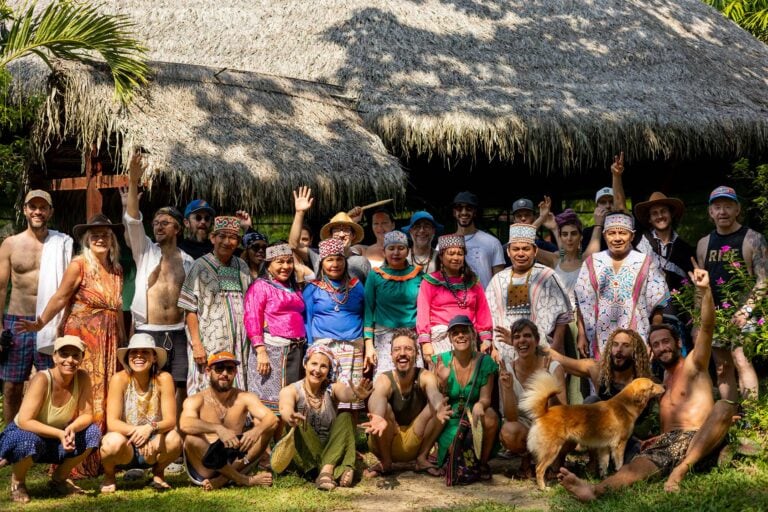
What is Being Lost – and Why it Matters.
Do you ever feel a sense of unease seeing Ayahuasca being served by those with little to no training? Have you noticed neo-shamanic ceremonies appearing in cities across the world, led by people claiming titles they haven’t earned?
Do you feel that ayahuasca is being pulled further and further from its roots – diluted, exploited, and stripped of the very context that makes it sacred? If so, you are not alone.
If you have sat in ceremony outside of the Amazon – in a city, a retreat center, or with a facilitator whose background you never fully questioned – this series is not a judgment of that. Many people have experienced genuine, meaningful healing in a wide variety of settings, and that reality is not in question here.
This is about something more fundamental: asking honest questions together.
What does traditional ayahuasca healing actually look like? What have we lost in translation? And what would it mean to truly honor the source?
This series explores those questions through the voices of the people who know best – Indigenous healers of the Amazon.
Behind the Scenes – Until Now
Since founding the Temple of the Way of Light nineteen years ago, I have deliberately remained in the background. My heart has always been in the walking, not the talking. I have always felt that the voice of this work belongs to the Indigenous healers of the Amazon.
It is their medicine, their forest, and their lineage. My role has been to listen, to support, and to help create the conditions for their wisdom to be shared with the thousands of people who have visited us.
It never felt right to be another voice speaking about a tradition that was never mine to claim.
Why This Series, Why Now?
Ayahuasca is now a global industry. It is being served across the world by people with no training, no lineage, and no relationship with the traditions from which it comes. Healing centers have been built far from the Amazon, generating significant profit, with little to no return to the people and the land where this medicine originates.
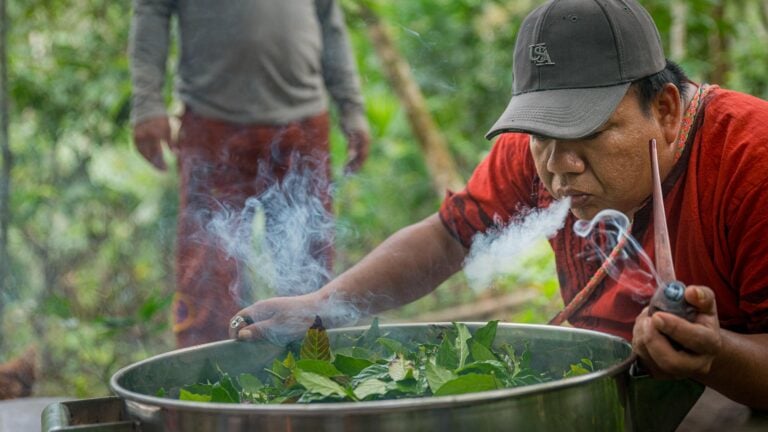
What is rarely understood – and almost never spoken about – is that in traditional Shipibo practice, ayahuasca (Oni in Shipibo, meaning wisdom) is not even given to Shipibo patients in communities when receiving healing. It is used by the healers as a diagnostic tool and a gateway to the Rao Nete, the World of the Plant Spirits. It is from this world that the ikaros emerge: the true keys to deep and lasting healing.
What is being commercialized and exported across the world is, in many cases, a shadow of something far more profound. What was once a sacred path has, in many corners of the world, become a commodity.
Ayahuasca is now being sold online, converted into capsules and gummy bears, stripped of every last trace of the tradition that gives it meaning. A title gained in a shamanic training course, or borrowed over a weekend, or ikaros written down and memorized rather than received, does not make a healer. And the people who sit with them deserve to know the difference.
We are not separate from this story. We do serve ayahuasca, but only ever with advanced Shipibo healers. And since the day we began in March 2007, the Temple of the Way of Light has walked a path of reciprocity – returning 100% of our proceeds to the people of the Amazon. In nineteen years, we have not encountered another center that holds this commitment. It has never felt optional. It is the foundation upon which the Temple was built.
We share this not to place ourselves above the conversation, but to be transparent about where we stand within it.
The sacred has become an industry. And in witnessing this shift, I have felt a growing responsibility to speak – not as an authority, but as a student of nearly two decades, sharing what I have been privileged to witness, and what I feel must not be lost.
The Voice This Moment Calls For
There is only one place to respectfully begin a conversation about what is truly at stake – with someone who has given his entire life to carrying what must not be forgotten.
Maestro José López Sánchez did not come to this path by choice. He was chosen – by his lineage, by his grandfather, and by the plants themselves. He has walked it with devotion for 33 years, not for recognition or reward, but because to do otherwise was never an option.
It is his voice, not mine, that this moment calls for.
Episode 1: What it Takes to Become a True Curandero
José’s path began at the age of nine, when his grandfather – a Meraya, the most revered category of healer in the Shipibo tradition – initiated him into a lineage that would shape the next 33 years of his life.
His mother, the legendary healer Ynés Sánchez González, and many of his family members carry the same ancestral knowledge. For José, curanderismo is not a calling he chose – it is the very current within which his life has moved.
This is not wisdom found in books or shamanic initiation courses. It is passed down through generations, taught in sama – master plant and tree dietas – and forged through a lifetime of tests, challenges, and sacrifice. All of it guided by the spirits of the rainforest.
As José shares in this conversation, it took him twenty years to reach a level where he could truly touch the roots of trauma – moving beyond the surface into the place where genuine, lasting healing becomes possible.
What makes this episode unlike anything we have shared before is José’s willingness to speak plainly – about what true initiation demands, the difference between mastery and its imitation, and why genuine apprenticeship within this tradition cannot be commodified or fast-tracked.
I have been his apprentice for eight years. Immersed in this path for nearly two decades, I still do not call myself a healer. The more I learn, the more I understand how much remains beyond what I know – and that I will never reach the levels of the true wisdom keepers and healers of the Amazon.
About The Way of the Rao Series
The Way of the Rao is an ongoing series of conversations honoring traditional Amazonian healing and wisdom traditions. Born from a necessity to speak the unspoken, it serves as a bridge to the true stewards of the vine — the Indigenous healers of the Amazon.
In the Shipibo tradition, Rao Nete is the living world of plant and tree spirits. To walk the Way of the Rao is to enter into a direct relationship with these ancient intelligences – the true teachers, doctors, and architects of healing. A Shipibo Onanya is “one who knows” – a master healer.
By sharing the lived experience and perspectives of traditional Amazonian healers, we aim to honor these ancestral systems – and to offer a compass for those seeking to distinguish genuine healing from the increasingly diluted offerings found both within and beyond the Amazon.
This is more than a story about ayahuasca. It is a call to remember the roots.
👉 Subscribe now to the Temple’s YouTube channel to receive Episodes 2 and 3 – and join a conversation that the ayahuasca industry would rather not have.
With deep respect and appreciation to the Shipibo Onanyabo,
Matthew
Founder – Temple of the Way of Light
Coming Next:
Episode 2 – Unmasking Neo-Shamanism: Traditional Ayahuasca Mastery – April 10th
Episode 3 – The Key to Shipibo Healing: Ayahuasca, Ikaros & Pruebas – April 17th
The Speakers
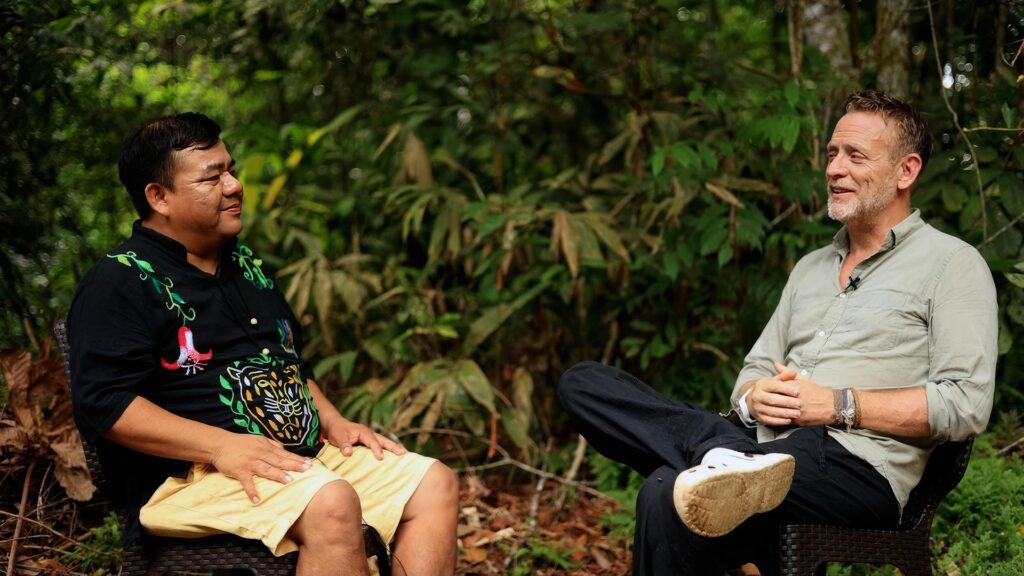
Maestro José López Sánchez: A traditional Shipibo Onanya and owner of Shipibo Rao, a dieta center close to Pucallpa in the Ucayali region, the Shipibo homeland. Known as “Sany Meny” (The Messenger), José carries a centuries-old lineage from the Shipibo community of Royaboya, where he was born.
His 33-year path began at age 9 under his grandfather, also named José Lopez/Sany Meny, a Meraya (the highest level Shipibo healer). Today, he stewards 45 hectares of Peruvian rainforest and facilitates master plant dietas (called sama in Shipibo), providing deep, tap-root level healing.
Matthew Watherston: Founder of the Temple of the Way of Light and the Chaikuni Institute. Since 2007, the Temple has served as a conscious departure from the commercialization of Ayahuasca, reciprocating all proceeds to Indigenous-led projects.
Shipibo Glossary
Onanya: “One who knows” – a Shipibo master healer
Rao Nete: the world of plant and tree spirits
Sama: a “master plant or tree dieta” – a process of healing or apprenticeship, typically in isolation, directly receiving the healing and teachings of plant/tree spirits.
Ikaro: a healing song channeled through a healer by the plant/tree spirits
Pruebas: (a Spanish word used by the Shipibo) – direct, felt, lived tests and challenges that are given by the plant/tree spirits