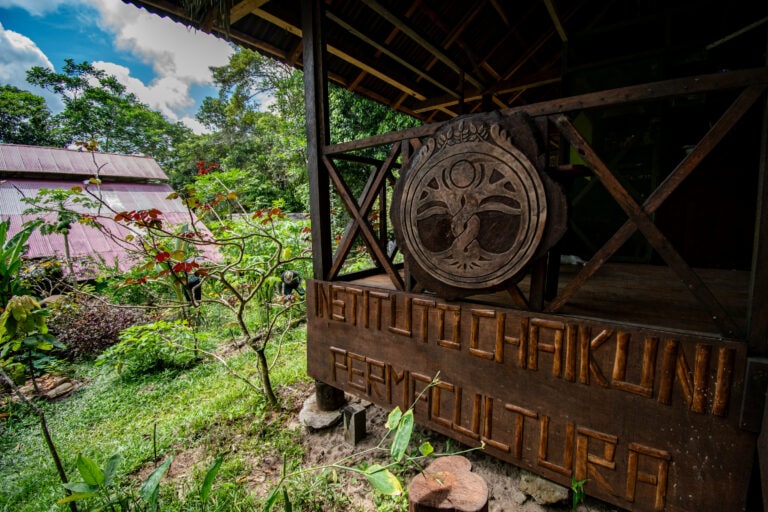
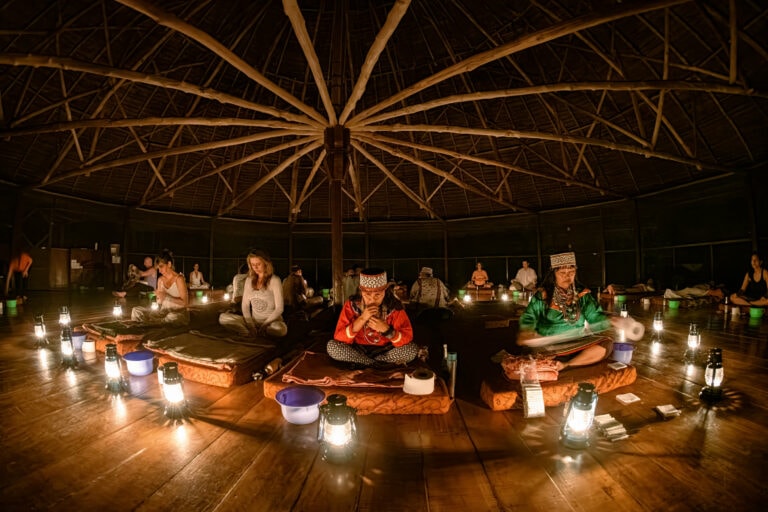
The Temple of the Way of Light is committed to building a rigorous body of scientific evidence on the efficacy of Amazonian plant medicines and healing traditions.
From 2015 to 2019, the Temple hosted a landmark research project in collaboration with the International Center for Ethnobotanical Education, Research, and Service (ICEERS) and the Beckley Foundation, examining the long-term effects of ayahuasca healing on well-being, quality of life, anxiety, depression, grief, and PTSD – as well as participant satisfaction with the Temple’s ayahuasca healing retreats.
The results were remarkable. Participants showed significant improvements both immediately following their retreat and sustained over a long-term, one-year follow-up period. The three papers below represent a meaningful contribution to the growing scientific literature on traditional ayahuasca healing as a treatment for deep-rooted psychological conditions.
Publications
1st published article:
González, D., Cantillo, J., Pérez, I. et al. Therapeutic Potential of Ayahuasca in Grief: a Prospective, Observational Study. Springer Journal of Psychopharmacology, Jan 14th 2020.
This was the first study to prospectively assess the long-term effects of ayahuasca healing on people grieving the loss of a loved one – a condition that conventional medicine often struggles to treat. The results were significant and grew stronger over time: grief severity decreased meaningfully, with effect sizes rising from 0.84 immediately after the retreat to 1.39 at the one-year mark – a large and clinically meaningful shift.
78.4% of participants described an ayahuasca experience that directly affected their grief process.
The study also found that participants became better at sitting with difficult emotions rather than avoiding them – developing a greater capacity to observe grief without being overwhelmed by it. This shift, known as decentering, appears to be one of the key mechanisms through which ayahuasca healing supports emotional recovery.
2nd published article:
González, D., Cantillo, J., Pérez, I. et al. The Shipibo Ceremonial Use of Ayahuasca to Promote Well-Being: An Observational Study. Frontiers Journal of Pharmacology. May 5th 2021.
This study examined the broader impact of our ayahuasca healing retreats on overall well-being across 200 participants – and found significant improvements across every measure tested: psychological, spiritual, and subjective well-being, as well as quality of life, all with large effect sizes sustained across the full year of follow-up. Decentering – the ability to observe thoughts and emotions without being consumed by them – showed a particularly high effect size of 0.97 immediately after the retreat, remaining strong at 0.87 at twelve months.
97% of participants reported persistent benefits immediately after the retreat, with 93.5% still reporting benefits at one year.
Importantly, the research ruled out the passage of time as an explanation – a subgroup analysis confirmed the improvements were attributable to the retreat experience itself. Like the grief study before it, this points to something genuinely transformative happening at the Temple.
3rd published article:
Symmetrical Global Mental Health (Sym-GMH): Ayahuasca and Shipibo Traditional Medicine for Lasting Changes in Personality and Quality of Life. Bouso, J.C., Andión, O., Cantillo, J., Pérez, I., Farré, M., Obiols, J.E., & González, D. Psychedelics. 2026.
This study found that people who took part in ayahuasca retreats with us experienced real, measurable changes in who they are – becoming less anxious and reactive, more open and sociable, and better able to cope with the emotional challenges of everyday life. These weren’t short-lived effects:
91.7% of participants reported lasting benefits a full year later, across their mental health, spiritual wellbeing, and personal growth.
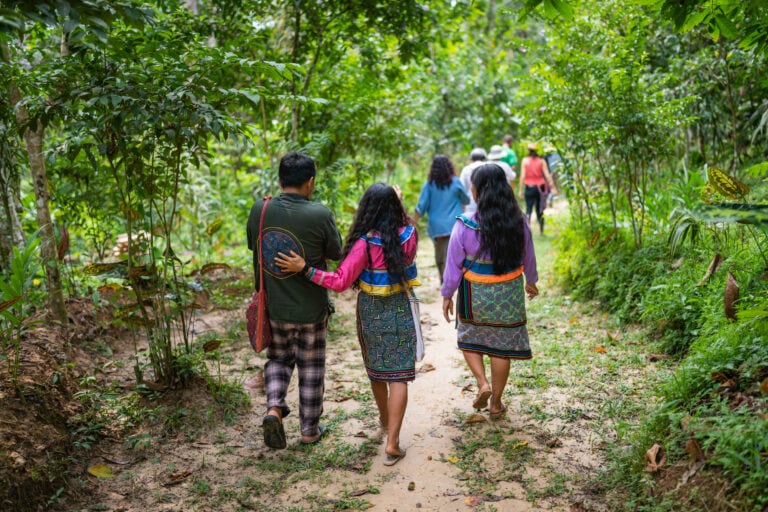
One of the most surprising findings was that participants didn’t credit the ayahuasca alone. The healers, the natural surroundings of the Peruvian Amazon, and the connections formed with fellow participants were all seen as essential to the process, pointing to something richer and more impactful than the medicine alone.
The study sits within the Symmetrical Global Mental Health paradigm – a framework proposing that traditional and Western medical systems should learn from each other on equal terms, rather than one replacing the other. The evidence suggests that Indigenous Amazonian traditions, when respected and preserved in their original context, have something real and lasting to offer people in the West seeking deeper healing.