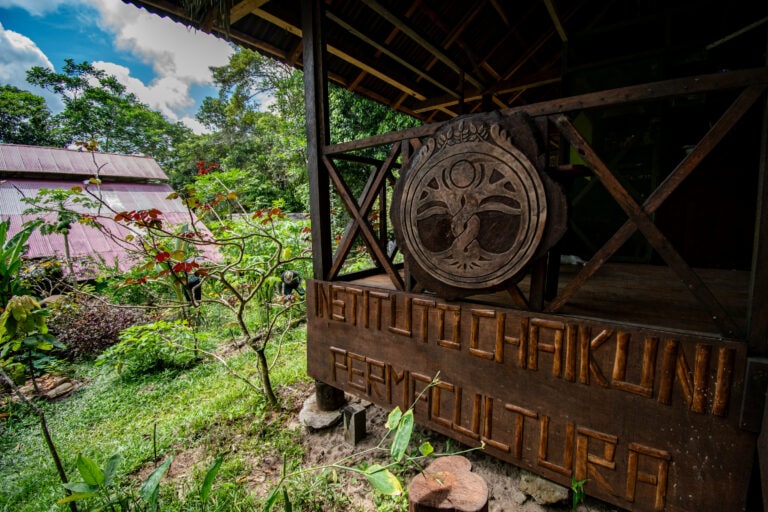
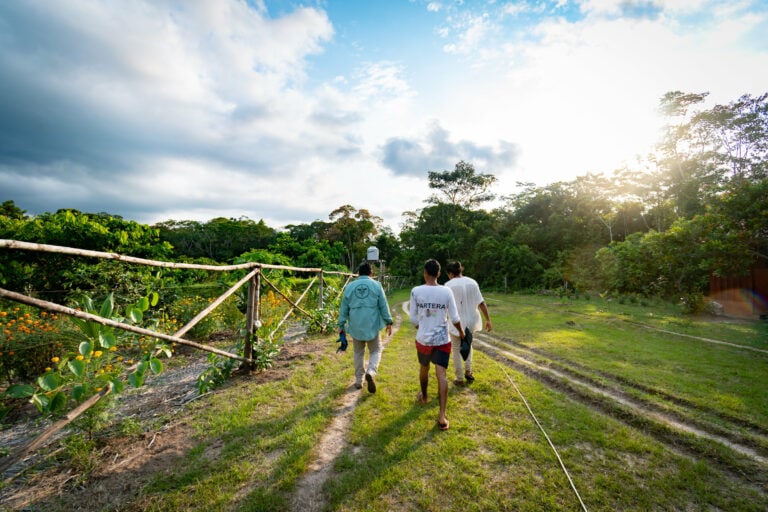
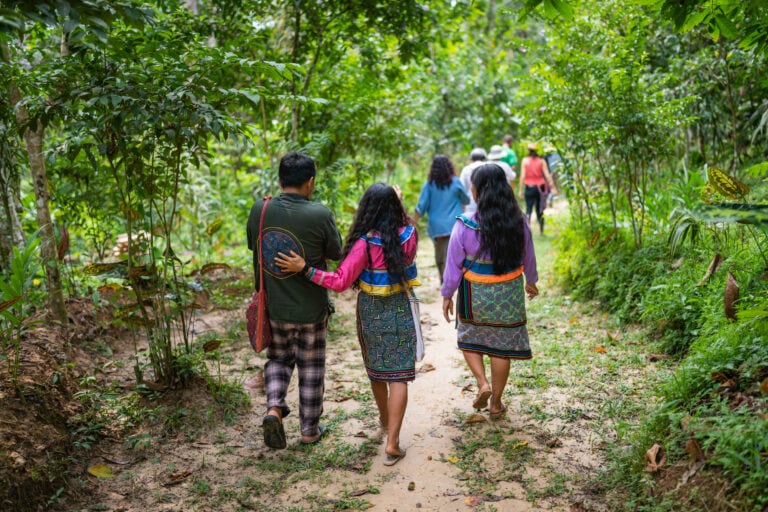
Following a visit by renowned permaculturist Doug Bullock and his team from Terra Phoenix Designs in March 2012, we have been implementing an extensive Permaculture Masterplan throughout the Temple grounds for over thirteen years.
Our fundamental intention is to reduce our ecological footprint to the most minimal negative impact on the environment, whilst working towards becoming fully self-sufficient and producing all fruit, vegetables, fish, chicken, medicinal plants, and lumber for construction. It’s a big goal yet we are making much progress!
The Temple now produces all the chicken meat and eggs for guests and staff onsite through an extensive organic chicken-farming program. We have also built nine fish farms, which, from 2024, will provide all fish to meet all the requirements of guests and staff. The primary focus is on healthy (no chemicals) and sustainable farming of paiche – an endangered fish species that is the largest river fish in the world.
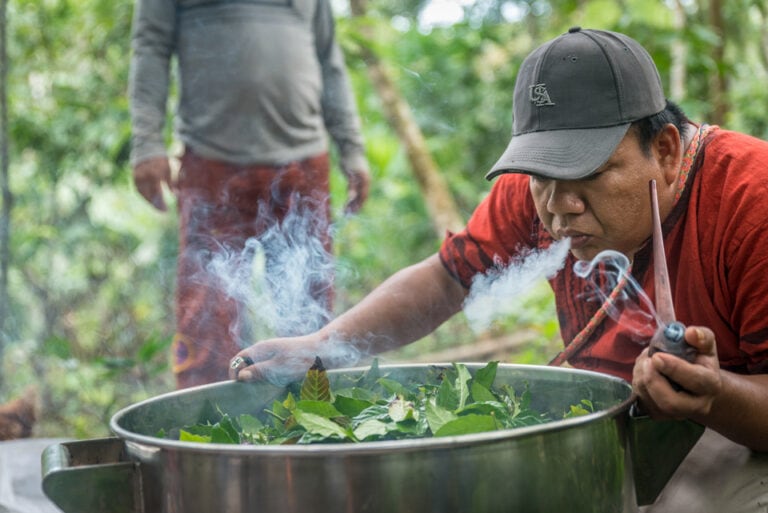
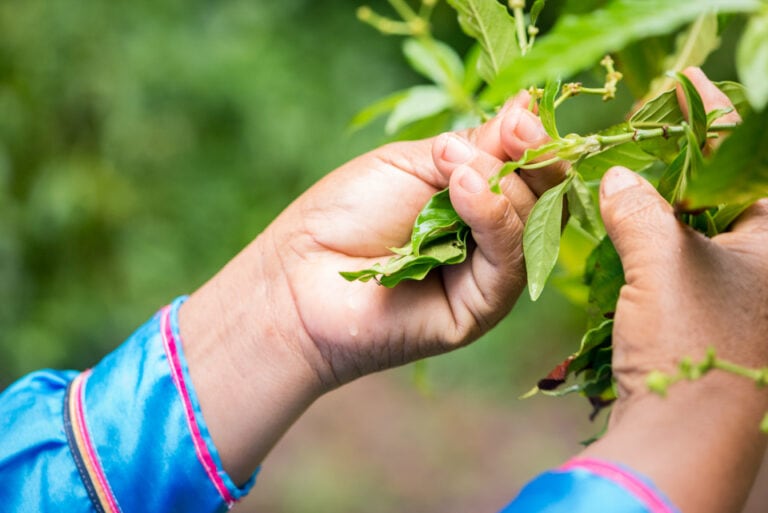
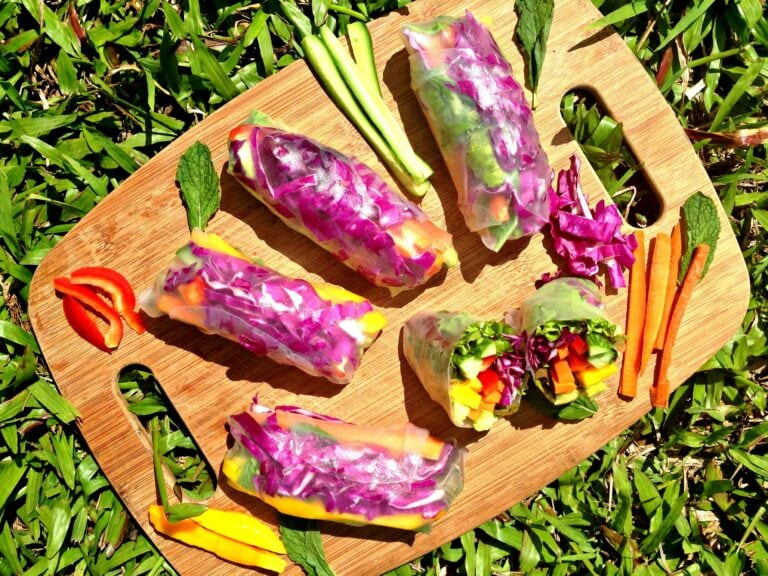
We also consistently produce a significant quantity of organic fruit and vegetables that are served throughout retreats, as well as provide our healers with all the medicinal plants needed during the healing process of our guests.

Ethics & Principles
Working in deep collaboration with our sister non-profit organisation, the Chaikuni Institute, the Temple masterplan is focused on these key areas:
- Earth Care – biodiversity is increased onsite through the use of syntropic farming and regenerative agroforestry, and by preventing harmful practices such as slash-and-burn and hunting within Temple grounds.
- People Care – quite simply, we care deeply! We look after our staff, ensuring they are well paid, have many benefits (health insurance, pension contribution, and 15 monthly salaries per year), and provide training in self-development and permaculture.
- Redistribution of surplus: since our inception in 2007, the Temple has donated all surplus revenue (profit) to outreach projects in the Amazon, mainly through the NGOs we established.
- Supporting eco-social enterprise initiatives in five local communities focused on developing sustainable livelihoods based on successional poly-cropping and regenerative agriculture.
- Integration and collaboration with the local communities.
- Contributing to the local economy through employment & purchasing products.
- Regular donations for communal benefit.
- Providing schoolteachers for the local school.
- A local Permaculture network to share resources and knowledge.
- A micro-enterprise was created for a local group of women, producing eco-yarn products from upcycled plastic waste.
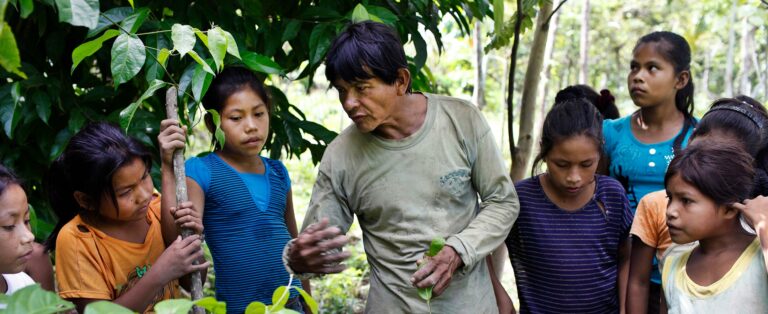
- Permaculture education for local villagers and folk from indigenous communities in the Loreto and Ucayali regions.
- Increasing the capacity of our staff, volunteers, and guests to enact a positive change in the world.
- Comprehensive permaculture curriculum and educational tools.
Design & Planning
- Zone differentiation is clearly defined, sectors are established, and soil types are identified to support crop-specificity.
- Traditional knowledge of plants – Shipibo ethnobotanical knowledge used during workshops, plant diets, and onsite medical treatment.
- Techniques and resources applied from analogue climates.
- Hundreds of exotic trees have been planted, including breadfruit, jackfruit, mangoes, and avocados.
- On-site demonstration of agroforestry systems (chacras integrales).
- Sustainable waste management with bio-digesters.
- Grey water treatment systems throughout the site.
- Upcycling of plastic waste to create eco-bricks, which will be used for construction.
- Ongoing collaborative design process with local, regional, and international experts.

Infrastructure
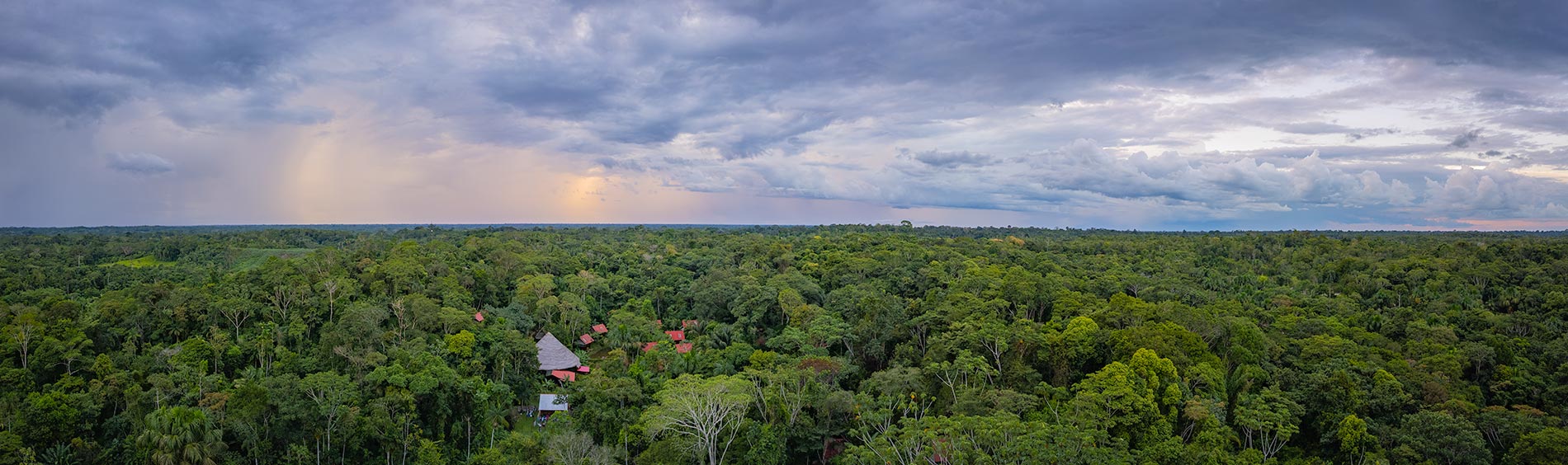
- The placement of infrastructure is consistent with permaculture planning, making use of sandy soils for drainage and mosquito control, and gradient variability for water distribution.
- Multiple water sources – rainwater catchment and spring boxes, and a functional hierarchy of use.
- Natural building – all infrastructure has been developed using sustainable construction materials and practices. Local materials, such as pole-wood and bombonaje thatch palm for roofs. Demonstration of earthbag construction using cob techniques as a potential model for future construction.
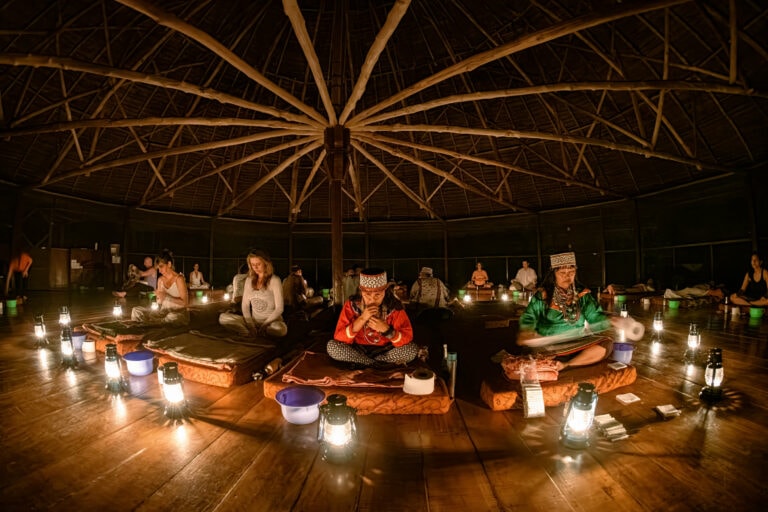
- Alternative energy – solar panels for staff and kitchens. Guests use lanterns for energy efficiency and to disconnect from ‘the grid’.
- Nurseries have been established on-site to produce all the seedlings required for system implementation and to create a germplasm bank for outreach initiatives.
- Swales, contour beds, and banana circles are used throughout the site.
- A recycling centre has been built to serve the Temple and the local community.

Production
- Soil regeneration – biochar is produced onsite, and terra preta soils are developed throughout the site
- Integrated fertility management.
- Use of invasive legume kudzu (Carnavalia sp.) for the production of high-quality nutrient tea.
- Urine is used for charging biochar.
- Food waste is composted and added to banana circles.
- Humanure is used for tree planting.
- Fungal inoculant used for legume species.
- Working with succession – shifting the forest towards pseudo-climax through the introduction of mature forest species.
- Edible landscaping is used throughout Temple Zone 1.
- Food production – fruit, perennial vegetables, and staple crops are produced onsite and purchased from neighboring communities.
- Polycropping and companion planting are used extensively on-site.
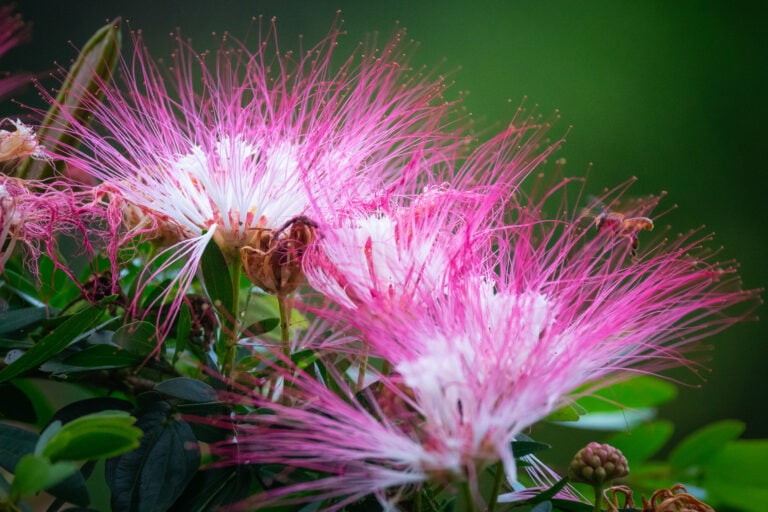
- Medicinal gardens are located throughout the Temple grounds.
And much more…!